Category: Gaming & Culture · 2026 | Read Time: 4 min
I need to tell you something slightly embarrassing.
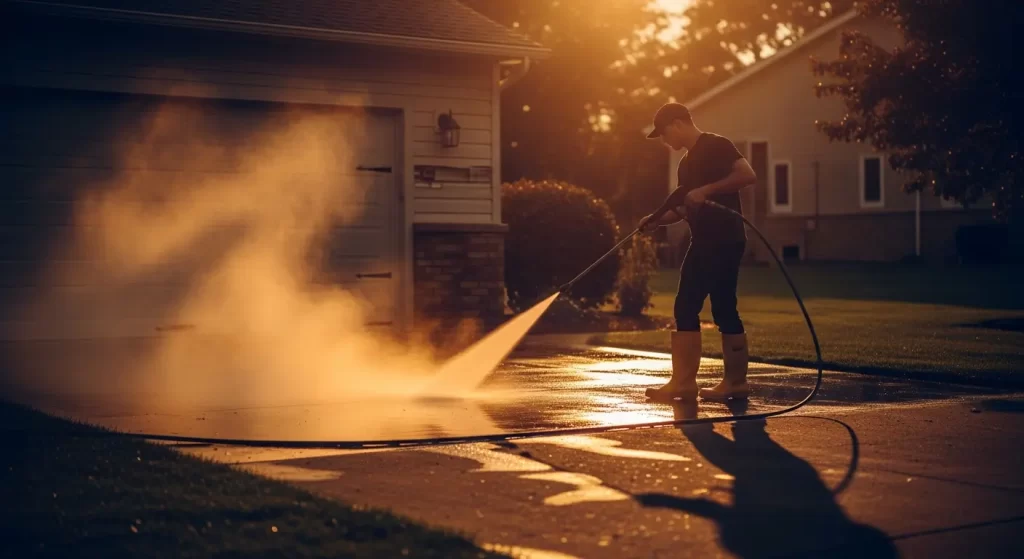
Last Friday, after a week of back-to-back meetings, a project that’s been “almost finished” for three weeks, and an inbox that seems to replenish itself overnight like some kind of cursed well, I sat down with a controller and spent two hours power-washing a fictional driveway.
No enemies. No storyline. No dramatic score swelling in the background. Just a dirty driveway, a virtual pressure washer, and the deeply specific satisfaction of watching grey concrete go clean in neat, even strips.
I went to bed feeling genuinely better. And I’ve been trying to figure out why ever since.
This Is Everywhere Right Now
Here’s the thing — I’m not unusual. In 2026, hyper-mundane simulator games are quietly outperforming big-budget action titles in daily engagement. Power-washing simulators. Trucking games where you drive cargo across empty highways for hours. Unpacking games where you just… place objects in rooms. Games built entirely around grocery stacking, room cleaning, and dishwashing.
No plot twists. No villains. Nothing at stake. And millions of people are choosing them over the most expensive games ever made.
From the outside, this makes no sense. But I think I understand it now, and it has very little to do with games.
The Thing Modern Work Never Gives You
Think about what a typical workday actually feels like to complete.
You answer emails, but the inbox is full again by morning. You make progress on a project, but “done” is still weeks away and the goalposts keep moving. You sit through meetings where things are discussed but rarely resolved. You work hard, genuinely, and at the end of the day it’s almost impossible to point to something and say — that wasn’t there before, and now it is, because of me.
Psychologists call the brain’s need for this Completion Bias — we’re wired to crave the feeling of finishing something. Not progress toward finishing. Not almost finishing. Actually finishing. The brain wants closure, and modern knowledge work is specifically, structurally bad at providing it.
The inbox is never empty. The project is never done. The ambiguity never resolves.
And over time, that wears on you in ways that are hard to name but easy to feel.
Why a Dirty Virtual Driveway Fixes Something Real
Simulator games are almost engineered to solve exactly this problem.
The task is clear. The goal is visible. The progress is literal — you can see the dirt disappearing in real time. And when the driveway is clean, it stays clean. There’s no follow-up. No one emails you the next morning to say the driveway is dirty again. It’s done. Objectively, verifiably, permanently done.
The brain gets what it’s been asking for all week: proof that effort produces results.
That’s not escapism in the usual sense. It’s not running away from reality into something more exciting. It’s closer to the opposite — finding, in a simple virtual task, the kind of tangible completion that reality keeps withholding.
The Pleasure in the Predictable
I used to think I played games to feel something exciting. Big worlds, high stakes, dramatic moments. And I still do, sometimes.
But there’s a different kind of satisfaction in a game that promises you something small and then delivers it completely. Clean the room. It gets clean. Deliver the cargo. It arrives. Stack the groceries. They stack.
No ambiguity. No moving goalposts. No task that bleeds into tomorrow.
Just a dirty wall, becoming clean, one strip at a time.
Honestly, on a Friday after the week I’d had? I didn’t need a hero’s journey.
I needed a driveway.