A few years ago, fast food was simply about convenience.
Quick burger.
Cold drink.
Fries on the side.
Done.
But something has changed.
Today, fast food feels harder to resist than ever before.
People open food delivery apps “just to check” and end up ordering within minutes. Cravings appear suddenly. Midnight orders have become normal. And many people now eat fast food even when they’re not truly hungry.
This isn’t happening by accident.
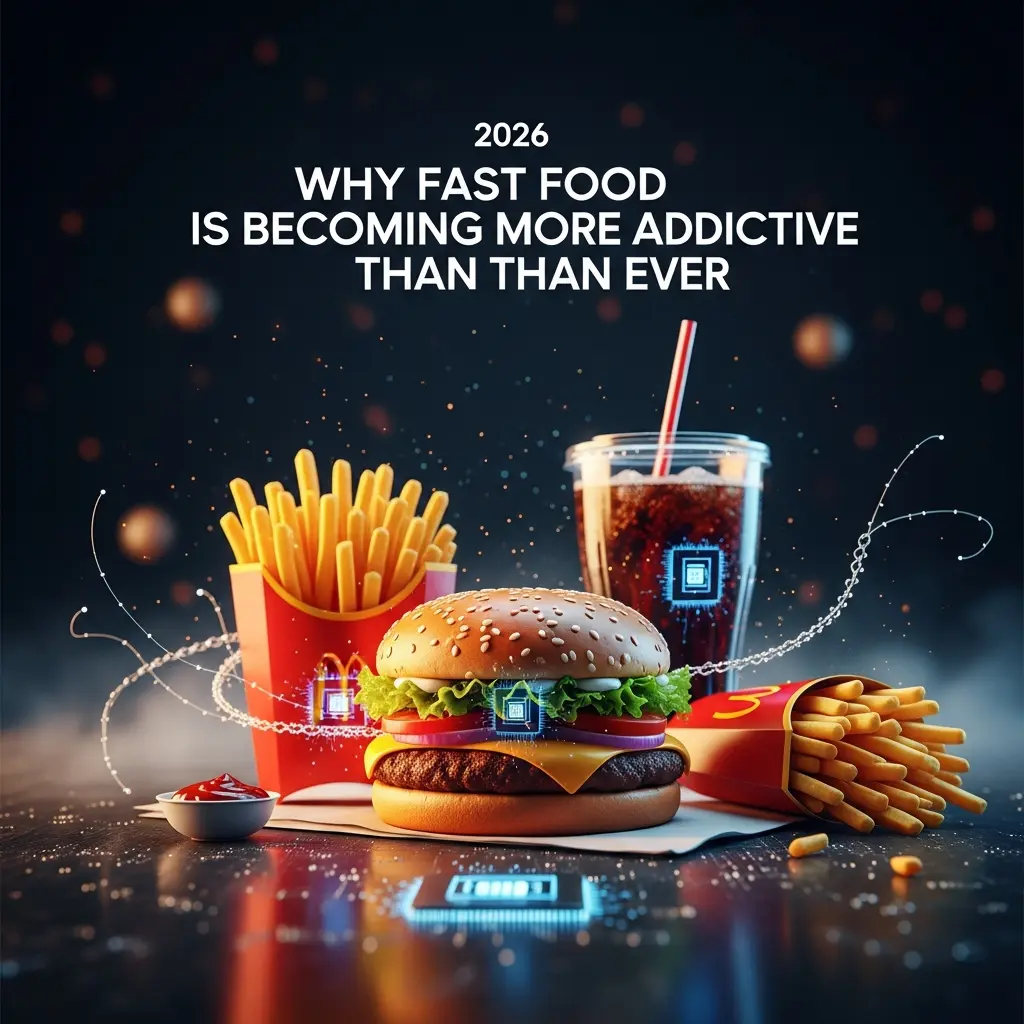
Modern fast food is being designed using psychology, technology, data, and food science to keep customers coming back again and again.
And honestly, most people don’t realize how engineered the experience has become.
Fast Food Companies Study Human Behavior Deeply
Big food brands no longer just sell meals.
They study:
Human cravings
Screen behavior
Buying patterns
Emotional triggers
Color psychology
Smell reactions
Dopamine responses
Every detail matters.
Why do so many fast-food logos use red and yellow?
Because the brain reacts strongly to sensory anticipation.
Modern fast food marketing is less about hunger and more about triggering desire.
Delivery Apps Changed Everything
Food used to require effort.
People had to:
Walk outside
Travel somewhere
Wait in line
Now food arrives at the door in minutes.
That convenience changed eating habits completely.
Today, cravings can be satisfied instantly.
And instant satisfaction trains the brain to repeat the behavior more often.
The result?
People snack more, order more frequently, and make more impulsive food decisions than ever before.
Especially late at night.
Fast Food Is Scientifically Engineered to Taste “Perfect”
One of the biggest reasons fast food feels addictive is because many items are carefully designed to hit what food scientists call the “bliss point.”
That means the perfect balance of:
Salt
Sugar
Fat
Crunch
Texture
Aroma
This combination activates pleasure centers in the brain very intensely.
That’s why:
One fry becomes ten fries
One slice becomes an entire pizza
One bite creates instant cravings for another
The brain remembers those dopamine spikes and starts seeking them repeatedly.
Social Media Made Cravings Worse
Food content is everywhere now.
You can’t scroll for five minutes without seeing:
Cheese-loaded burgers
Crispy fried chicken
Viral desserts
Street food videos
Giant pizzas
Chocolate explosions
These videos are designed to overstimulate the senses.
The sound effects alone are carefully edited to make food seem irresistible.
Even if someone wasn’t hungry before watching, the brain often starts craving food afterward.
That’s why food content performs so well online.
Humans are naturally wired to react strongly to visual food stimulation.
Stress Eating Is Becoming Extremely Common
Modern life is exhausting.
The problem is that emotional eating can slowly become a habit instead of an occasional behavior.
That’s why many people today don’t just eat because they’re hungry.
They eat because:
They’re stressed
Bored
Lonely
Mentally exhausted
Fast food becomes emotional escape.
Portion Sizes Keep Growing Quietly
Another major change is portion inflation.
Meals today are often much larger than they were years ago.
Companies discovered something important:
People perceive “more food” as better value.
So drinks became bigger.
Fries became larger.
Cheese became extra-loaded.
Desserts became oversized.
Over time, this quietly changes what the brain considers a “normal” portion.
And once larger portions feel normal, smaller meals stop feeling satisfying.
Younger Generations Are Growing Up With Digital Food Culture
Teenagers today experience food differently than previous generations.
Food is now connected to:
Viral trends
Online challenges
Mukbang videos
Influencer reviews
Delivery apps
Food aesthetics
Eating is no longer just physical.
It has become entertainment.
That shift is changing relationships with food across the world.
But People Are Also Becoming More Health Conscious
Interestingly, the same internet that promotes fast food is also spreading awareness about health.
People are slowly becoming more interested in:
High-protein meals
Clean eating
Traditional diets
Gut health
Fitness lifestyles
That’s why many fast-food companies are now trying to appear healthier while still keeping foods highly addictive.
It’s a strange balance between wellness marketing and craving psychology.
Final Thoughts
Fast food today is far more than quick convenience.
Why Fast Food Is Becoming More Addictive Than Ever in 2026