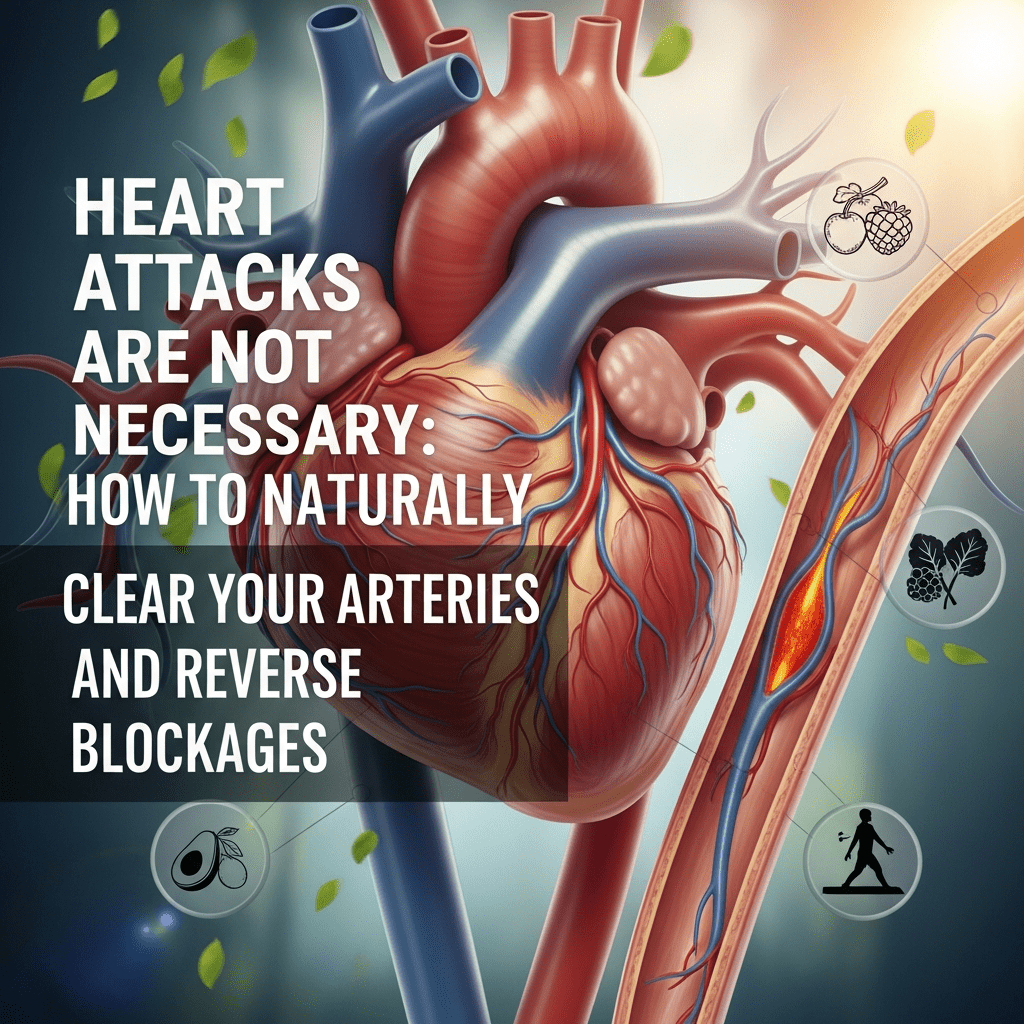
Heart Attacks Are Not Necessary: How to Naturally Clear Your Arteries and Reverse Blockages
We used to think that heart disease was unavoidable, something that happens abruptly because of becoming older or having terrible genes. But the scary truth is that heart attacks are now killing people in their 30s and 40s. The good news? This illness can not only be avoided, but in many situations, it can also be cured.
The contemporary way to keep your heart healthy goes against the old way of rushing into surgery. Instead, it is based on a basic, rational idea: your body can start cleaning up the mess that is already there if you stop pouring “garbage” into it.
Here is an explanation of the problem and the lifestyle-based remedy that can help lower cholesterol and stop heart attacks without having surgery.
The Problem: It’s More Than Just a “Plumbing” Issue
It doesn’t happen overnight that you have a heart attack. It is the product of years of maltreatment. The process can start as early as age 20, when fatty deposits (plaque) start to build up in the arteries.
The buildup of fat is mostly caused by cholesterol and triglycerides.
Most of the cholesterol in your body originates from animal sources like meat, eggs, and high-fat dairy.
Triglycerides are basically oil.
- The Myth of Oil This is perhaps the most common mistake people make about nutrition these days. People tell us that some oils are good for our hearts. In reality, all oils, including olive, rice bran, and vegetable oils, are triglycerides. There is no fat in them. Oil thickens the blood and adds to the sludge that jams your arteries when you eat it.
- The Trap of Surgery Angioplasty (stents) or bypass surgery are common medical treatments for patients with blockages. These are useful in emergencies, although they don’t always work for long. Picture a road with a lot of holes in it. The surgery fixes the pothole, but it doesn’t stop the huge trucks from ruining the road again because of their unhealthy diet and lifestyle. The obstruction will come back if you don’t change the habit that produced it.
- You can stop heart disease from getting worse and even clear up blockages that are already there by getting rid of the things that cause them.
Start cooking using “Zero Oil” You need to get rid of visible fats in order to cease feeding the clogs. This means that you can’t use any oil or ghee while you cook.
The secret is that spices, not oil, give food its flavor.
The Method: You can “sauté” spices by adding a little water to them. This brings out their flavor like oil does, but without the fat that clogs arteries.
- Get rid of cholesterol in your diet A plant-based diet is the safest choice for people with heart problems because plants don’t have cholesterol. Don’t eat red meat, chicken, fish, or egg yolks. If you consume milk, make sure it is skimmed or double-toned to get rid of the fat.
- Turn on your “natural bypass.” The heart is an amazing piece of engineering. It really does have a backup system of auxiliary arteries (collaterals) that are generally not active. You can help your body open these natural channels and improve blood flow by doing moderate exercise every day, like brisk walking for 35 minutes, and reducing stress with yoga.
- Managing Stress Stress is a catalyst. You could have a 70% blockage and still live normally, but if you are under a lot of stress, that plaque could break, causing a clot and a heart attack. Taking care of how you deal with stress is just as important as taking care of what you eat.
- Smart Diagnostics Instead of jumping into intrusive procedures that require inserting wires inside the body only to “check” the heart, look for non-invasive options. A CT coronary angiogram is a quick scan that can tell you the exact percentage of your blockage without having to go to the hospital or have surgery.
The Safety Net for Emergencies
Being ready can save a life, even though prevention is important. If you or someone you know has the traditional indicators of a heart attack, such as intense chest discomfort, sweating, and trouble breathing when at rest, time is not on your side.
Have a “pocket kit” ready with three specific medicines:
Disprin/Aspirin (a blood thinner)
Clopidogrel (anti-platelet)
Atorvastatin (high-dose cholesterol reduction)
Taking them right away while rushing to the hospital can break up clots and stop irreparable damage to the heart muscle.
The Bottom Line
Heart disease is a disease of the way you live, so the solution is also in the way you live. You can live a long life without heart attacks if you stop eating oil, learn how to deal with stress, and realize that you can mend your own arteries.