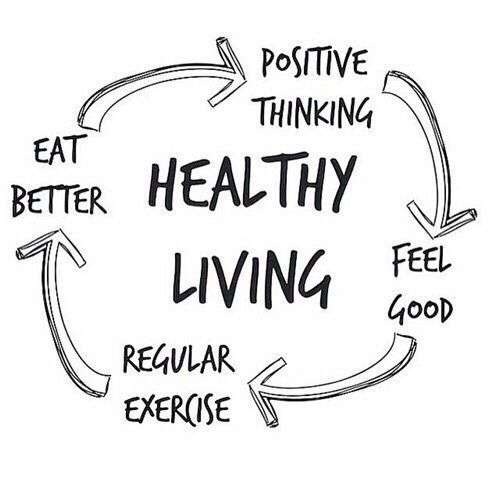

Two things are happening simultaneously in global health right now that seem unrelated but are actually expressions of the same underlying shift. On one side, health agencies are getting significantly better at detecting and containing infectious disease threats before they become crises. On the other, individuals are gaining access to continuous health monitoring tools that were unimaginable a decade ago.
Both are about the same thing: moving from reactive to proactive.
The Zoonotic Disease Picture
The WHO’s May 14 health update included increased attention on Hantavirus surveillance in rural and border-adjacent regions. Hantavirus is transmitted primarily through contact with infected rodents and has been monitored as a zoonotic concern for decades. What’s different in 2026 isn’t the disease — it’s the detection infrastructure surrounding it.
Modern surveillance systems now combine AI-based environmental monitoring, real-time wildlife population tracking, and cross-border health data integration in ways that allow containment responses to happen faster and more precisely than the older models permitted. The emphasis has shifted from managing outbreaks after they develop to identifying conditions that might produce them before they do.
This proactive containment approach is the foundation of what public health professionals are calling global health security frameworks — systems designed not just to treat disease but to prevent its spread in the first place. For most people, this operates invisibly in the background. It shows up in your daily life only when it fails, which is exactly the intended outcome.
Your Body as a Continuous Data Stream
The traditional annual physical exam is quietly becoming obsolete as the primary health checkpoint — not because it wasn’t useful, but because continuous monitoring provides a fundamentally more accurate picture of health than a yearly snapshot.
Continuous Glucose Monitors are the clearest example of this shift. Rather than a single fasting glucose reading once a year, a CGM shows how your body responds to specific foods, to stress, to sleep quality, and to exercise in real time. The difference in information quality is enormous. Patterns that would be invisible in annual testing become obvious within a few weeks of continuous monitoring.
Emerging tools for tracking C-reactive protein — a marker of systemic inflammation — are extending this principle further. Chronic low-grade inflammation underlies a significant number of serious health conditions, and the ability to track it continuously rather than measuring it occasionally changes what early intervention looks like.
The practical implication is that health becomes something you understand in real time rather than something you check in on periodically and hope hasn’t changed too dramatically since the last visit.
Brain Health as a Priority, Not an Afterthought
Mental performance and stress resilience have moved from the periphery of wellness conversation to its centre. The growing interest in non-invasive vagus nerve stimulators reflects a broader shift toward active management of the nervous system rather than simply responding to burnout after it arrives.
Devices designed to stimulate it non-invasively aim to improve stress recovery, support emotional regulation, and enhance mental clarity. The research is still developing, but the direction of interest reflects something real about where people’s health priorities are moving — toward maintaining cognitive function and resilience rather than just treating their absence.
The Shift That Connects All of This
Whether you’re looking at zoonotic disease surveillance or personal metabolic tracking, the same philosophical change is operating underneath. Healthcare is moving away from population-level generalised treatment toward individual-level precision prevention.
Your gut microbiome, your genetic risk profile, your specific inflammation markers — these produce a health picture that’s uniquely yours and that generic protocols can’t fully address.
The question healthcare is learning to ask is no longer just what works for this condition. It’s what does this specific person’s biology actually need.
That’s a genuinely different question. And it’s producing genuinely different answers.
Something has been quietly happening in the Indian beverage market over the past couple of years that deserves more attention than it’s been getting. The drinks people are reaching for have changed — not dramatically, not all at once, but in a direction that’s increasingly hard to miss once you start noticing it.
It’s not just about hydration anymore. People want their drink to do something.
From Refreshment to Function
Walk into any urban supermarket or pharmacy in 2026 and the functional beverage section has expanded in a way that would have seemed unusual three years ago. Drinks positioned around focus, immunity, sustained energy, and stress management are growing at roughly 11.7% annually — a rate that makes traditional carbonated sodas look like they’re standing still.
This isn’t trend-following for its own sake. It reflects a genuine shift in how a growing segment of Indian consumers — particularly working professionals and health-conscious young adults — think about what they put in their bodies during the day. The question isn’t just “does this taste good?” It’s “does this actually help me?”
That’s a meaningfully different consumer relationship with a beverage category.
India’s Wellness Heritage Finally Getting Its Moment
One of the most interesting aspects of this shift is where the innovation is coming from. Indian brands aren’t just copying Western functional drink formats — they’re reaching into their own cultural heritage and finding ingredients that have always been there.
Ashwagandha, tulsi, amla, and other Ayurvedic staples are appearing in ready-to-drink formats that are convenient, well-designed, and positioned with the kind of ingredient transparency that modern consumers expect. Millet-based drinks are finding audiences among people looking for gut health support and sustained energy without the spike-and-crash of caffeine-heavy alternatives.
The appeal isn’t nostalgia for its own sake. It’s the combination of genuine wellness credibility — these ingredients have documented traditional use and growing scientific backing — with the convenience that modern life requires. You can drink an ashwagandha-based beverage during your commute in a way that you couldn’t easily incorporate the same ingredient into your morning otherwise.
Matcha and adaptogenic herbs are joining this space too, appealing to consumers who want clean stimulation — alert but calm, focused but not wired.
The Bottled Boba Development Nobody Expected
The most surprising entrant in the functional beverage space is bottled popping boba drinks. What was a café experience has migrated to retail shelves, and brands like The Bobalist are making it work in ways that go beyond the novelty.
These drinks are succeeding because they offer something most beverages can’t — a genuinely different sensory experience. The texture, the visual appeal, the playful premium positioning — all of it resonates with younger consumers who want their choices to be shareable as well as satisfying. Function and aesthetics aren’t separate considerations for Gen Z. They’re the same consideration.
The Label Reading Habit That’s Changing Everything
Perhaps the most significant development isn’t in the products themselves but in how people are choosing between them. Indian consumers in 2026 are reading labels in a way they weren’t five years ago. Not just checking calories or sugar — actually examining the active ingredient list, understanding what adaptogens are and what they’re supposed to do, distinguishing between genuine functional claims and marketing language.
This label literacy is the most durable shift in the whole story. Brands that are transparent about what’s in their products and honest about what those ingredients do are building the kind of trust that creates long-term loyalty rather than trial purchases.
The drink of 2026 isn’t just refreshing. It’s doing a job. And consumers are getting better every day at checking whether it’s actually doing it.
If you checked gold prices this morning and did a double take, you weren’t misreading the number. Gold hit ₹1,54,000 per 10 grams in major cities today, and the reason sits squarely in a policy decision announced on May 13th that caught most of the market off guard.
The government raised the total import duty on gold and silver to 15% — a 10% basic customs duty plus a 5% Agriculture Infrastructure and Development Cess. To put that in context, the previous rate was 6%. This isn’t a gradual adjustment. It’s effectively tripling the duty structure overnight, and it’s being described by officials as an emergency measure to defend the rupee.
Why This Happened Now
The rupee has been under sustained pressure, hovering near record lows against the dollar. When a currency is weakening and you’re importing large quantities of dollar-denominated commodities, you’re accelerating the problem from both ends simultaneously — your import bill rises in rupee terms and your demand for dollars increases, which puts further downward pressure on the currency you’re trying to protect.
Gold and silver are among India’s largest import categories. The country has an extraordinary cultural and economic appetite for both — weddings, festivals, investment, industrial use — and that appetite doesn’t reduce much even when prices rise. When gold imports stay high despite a weakening rupee, the current account deficit widens and the currency pressure compounds.
The duty hike is an attempt to break that cycle. Higher import costs reduce physical gold imports, which reduces dollar outflows, which eases some pressure on the rupee. The logic is straightforward. Whether it works is a separate question.
The Grey Market Problem Nobody Wants to Say Out Loud
Here’s the part of this policy that should be discussed more openly than it typically is. India has a long and well-documented history of sharp import duty increases on gold triggering a revival of informal trading channels.
When the official price becomes significantly more expensive than what can be obtained through other means, the incentive to use those other means increases proportionally. The 2013 duty hike to 10% contributed to a meaningful grey market resurgence. The move to 15% creates an even stronger incentive differential.
This matters for the policy’s stated goal. If a significant portion of gold demand simply migrates to informal channels rather than reducing overall, the impact on dollar outflows is considerably smaller than the headline duty change suggests. You’ve raised the cost for legitimate buyers without necessarily reducing total imports.
What This Means If You’re Thinking About Gold as an Investment
For investors rather than jewellery buyers, this duty hike changes the entry calculation for physical gold significantly. Paying 15% in duty plus making charges plus storage costs is a meaningful headwind against the investment return you’re targeting.
This makes the alternatives worth taking seriously. Gold ETFs don’t attract import duty because they’re paper instruments tracking the gold price rather than physical imports. Digital gold platforms similarly sidestep the physical import chain. Both offer genuine gold price exposure without the acquisition cost premium that physical gold now carries.
If you believe gold remains a relevant portfolio hedge — and given current rupee weakness and global uncertainty, there’s a solid argument that it does — the how matters as much as the what. ETFs and digital gold are considerably more cost-efficient entry points in a 15% duty environment than physical purchase.
The Honest Assessment
This duty hike will provide some short-term support for the rupee. It will not resolve the structural factors driving rupee weakness. It will increase domestic gold prices and may partially revive informal import channels. It makes physical gold a less efficient investment vehicle than it was last week.
Plan accordingly.
The energy problem sitting at the heart of modern AI computing is real and it’s getting harder to ignore. Training large language models, running real-time analytics, powering the cloud infrastructure that the entire digital economy depends on — all of this consumes electricity at a scale that is straining power grids and driving data center operators to increasingly unusual solutions.
How unusual? Google and SpaceX are apparently considering orbit.
The Space Cloud Idea — Impractical Until You Understand Why It’s Not
The collaboration between Google and SpaceX on experimental orbital data centers sounds like the kind of announcement that belongs in a science fiction treatment rather than an infrastructure planning document. But the logic behind it is more grounded than the concept initially appears.
Traditional data centers have two enormous ongoing costs: electricity for processing and electricity for cooling. The cooling requirement alone accounts for a significant portion of operational expenses — keeping servers from overheating requires constant, energy-intensive climate management. In space, you get two things for free that are prohibitively expensive on Earth: effectively unlimited solar energy and natural cooling through the vacuum surrounding the hardware.
If you can eliminate or dramatically reduce two of your largest cost centres while also removing your dependence on terrestrial power grids that are already under pressure, the economics start looking less absurd. Launch costs have fallen significantly as SpaceX has developed reusable rocket technology. Low Earth orbit is considerably more accessible in 2026 than it was five years ago.
The technical challenges are real and substantial — maintenance in orbit is not straightforward, hardware reliability in extreme conditions is a genuine engineering problem, and the latency implications of space-based computing affect certain applications significantly. But the direction of the thinking is a rational response to a genuine constraint.
Sam Altman Disagrees — and His Alternative Is Worth Taking Seriously
OpenAI’s CEO has been publicly sceptical about orbital data centers, and his counterargument deserves attention rather than dismissal.
Altman’s position is essentially that the energy problem should be solved on Earth, through nuclear power rather than through space infrastructure. Advanced nuclear reactors — both the established large-scale variety and the emerging small modular reactor designs — offer stable, scalable, carbon-minimal energy that doesn’t require solving the extraordinary engineering challenges of orbital deployment.
This creates a genuinely interesting philosophical divide in how the industry is thinking about AI’s energy future. The Google-SpaceX vision goes up and out — move the infrastructure to where the constraints don’t exist. Altman’s vision goes down and deep — solve the energy problem at the source through better terrestrial generation.
Both are serious responses to the same real problem. Which approach proves more practical and more economically viable will become clearer over the next several years as both paths develop.
Meanwhile in India, AI Is Doing Something Quietly Important
While this high-altitude debate unfolds between tech billionaires, India Post launched APT 2.0 today — an AI-driven logistics platform designed to modernise rural delivery networks across one of the world’s most complex last-mile delivery challenges.
APT 2.0 uses real-time demand intelligence to automate routing, anticipate parcel load fluctuations, and reduce operational delays across India’s vast postal network. For village branch offices that have operated on largely manual processes, this represents a genuine operational transformation — not orbital, not nuclear, just carefully applied machine intelligence making daily work measurably better.
The contrast between these two stories is the most interesting thing about the technology moment we’re in. The same underlying wave of AI capability is manifesting simultaneously as billion-dollar debates about space infrastructure and as routing optimisation for rural postal workers.
One is about scaling intelligence beyond Earth. The other is about bringing it to the last mile. Both matter. Both are real. And 2026 is somehow the year they’re both happening at once.
Something fundamental shifted in digital marketing this year and a lot of brands haven’t caught up yet.
For two decades, the game was straightforward enough. Write content, build backlinks, optimise for keywords, rank on page one, get clicks. The entire industry — agencies, tools, strategies, careers — was built around that logic. And it worked, mostly, for a long time.
Then AI search happened at scale. And the click stopped being the point.
The New Competition Nobody Fully Prepared For
When someone asks an AI assistant a question today, they often get a direct answer without visiting a single website. No click. No traffic. No chance to make your case in front of them. Just an AI-generated response that either cites your content or doesn’t — and if it doesn’t, you effectively don’t exist for that interaction.
This is the Answer Engine Economy, and it’s reshaping where marketing budgets go and what content strategy actually means. Brands are no longer asking only “how do we rank?” They’re asking “how do we become the source AI systems trust enough to quote?”
That’s a genuinely different question. And it requires genuinely different answers.
What AI Systems Actually Prefer
The content that gets cited by AI tools in 2026 doesn’t look like the content that dominated search rankings in 2019. Long, keyword-stuffed articles that were optimised for crawlers but painful for humans to read are actively losing relevance. AI summarisation engines process information differently — they reward clarity, structure, factual density, and genuine expertise.
Practically, this means shorter sentences. Clean formatting. Strong headers that make the content’s structure immediately legible to both humans and machines. Question-and-answer formatting that directly addresses what people are actually asking. Specific facts and data rather than vague assertions padded to hit a word count.
What it really means is that good writing and machine-readable writing are converging. The content that earns AI citations is also, usually, the content that humans actually find useful. That’s not a coincidence — it reflects AI systems getting better at identifying the same quality signals that thoughtful readers have always responded to.
The AI Slop Problem and Why It Creates Opportunity
The internet in 2026 is genuinely flooded with what the industry has started calling AI slop — mass-produced content that looks like an article but contains no real expertise, no original insight, and no reason to exist beyond filling a page. It was generated quickly, optimised superficially, and published in volume because the old logic said more content meant more traffic.
That logic is breaking. Search engines and AI models are getting meaningfully better at distinguishing between content that reflects genuine knowledge and content that patterns-matches the surface features of genuine knowledge without containing any of the substance.
This creates a real opportunity for brands and creators who actually know what they’re talking about. In an environment saturated with shallow content, depth and authentic expertise stand out more than they have in years. The brands investing in real subject matter experts, original research, and carefully structured communication are outperforming automated publishing strategies in ways that are measurable and growing.
The Honest Takeaway
Answer Engine Optimisation isn’t a tactic you layer onto your existing strategy. It’s a reorientation of what the goal is. The goal is no longer to rank — it’s to become the source that intelligent systems trust enough to cite when someone asks a question you should be answering.
Trust, in 2026, is the ranking signal that matters most.
That’s a higher bar than the old SEO game required. It’s also a more sustainable one.