
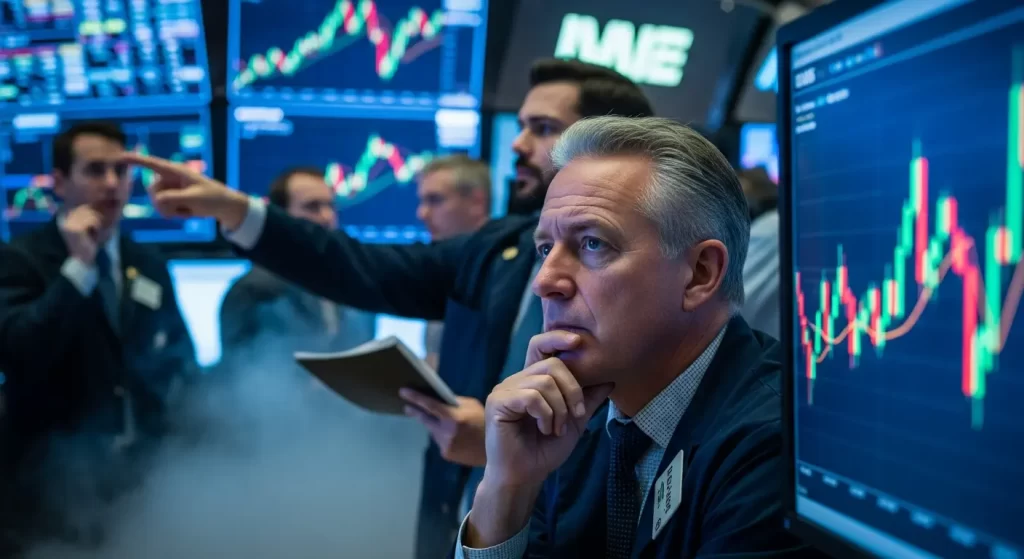
If you checked your portfolio yesterday and felt a sudden, unexpected sense of relief, you weren’t alone. Indian markets staged a sharp recovery, crude oil pulled back from elevated levels, and the general mood across trading desks and investor forums shifted from anxious to cautiously optimistic — all because of a single diplomatic development that most people hadn’t seen coming.
Reports emerged of a 15-point peace proposal from the United States to Iran. And markets, which had been wound tight with geopolitical tension for weeks, exhaled.
The question worth asking now is a simple one: is this the real thing, or is it just relief?
What Actually Happened in the Market
Let’s start with what’s visible on the charts, because the numbers tell a clear story even if the interpretation is still open.
The Nifty 50 and Bank Nifty had both been under sustained pressure. Global uncertainty, elevated crude prices, and the general nervousness that comes with unresolved geopolitical risk had pushed both indices into oversold territory — meaning sellers had been in control long enough that valuations were starting to look stretched on the downside.
When the U.S.-Iran diplomatic news landed, it acted like a pressure valve releasing. Traders who had been sitting defensively — holding cash, carrying hedged positions, waiting for a reason to re-enter — suddenly had that reason. Short covering accelerated the move. Buying interest picked up across banking and energy-sensitive sectors. The bounce was sharp and, on the surface, convincing.
But here’s what experienced market participants know about moves like this: sharp bounces driven by sentiment are different from sustained rallies driven by fundamentals. The first kind can reverse just as quickly as they started. The second kind builds on something real. Right now, what we have is the first kind — and whether it becomes the second depends entirely on what happens next in Tehran and Washington.
Oil Pulled Back — And That’s Genuinely Good for India
The crude oil reaction was arguably more meaningful than the equity bounce, at least in terms of real-world impact.
The Strait of Hormuz sits at the centre of this story. It’s a narrow waterway through which an enormous share of global oil supply passes every day — and any time Iran is involved in a geopolitical flashpoint, oil traders immediately start pricing in the risk of that chokepoint being threatened. That risk premium had been sitting in crude prices for weeks, pushing them higher and adding pressure to an Indian economy that imports the vast majority of its oil needs.
With diplomatic talks back on the table, that risk premium started unwinding. Crude prices declined. And for India specifically, lower oil prices are unambiguously good news — they reduce import costs, ease inflationary pressure, improve the current account position, and give the RBI more room to manoeuvre on monetary policy.
The catch, as always with oil markets, is that the situation can flip on a single headline. One breakdown in negotiations, one provocative statement from either side, and the risk premium comes roaring back. Oil traders are not known for their patience or their willingness to give diplomacy the benefit of the doubt.
Where the Nifty Goes From Here — The Honest Answer
Market analysts are currently pointing to a consolidation range of roughly 22,400 to 23,850 for the Nifty while the world waits to see whether the peace proposal leads anywhere concrete. The key resistance level to watch is around 23,465 — a point where previous selling pressure concentrated and where the index will likely face pushback on any further upward movement.
This “wait-and-watch” framing is the right one, even if it’s unsatisfying for people who prefer clear directional calls.
Here’s the reality of where we are: the market has reacted positively to a proposal, not an agreement. Iran hasn’t confirmed anything. The 15 points haven’t been publicly detailed or accepted. The optimism in prices right now is based on the possibility of progress, not the fact of it. That’s a meaningful distinction when you’re deciding whether to add risk to your portfolio or reduce it.
Algorithmic trading systems processed the headline and generated buy signals within milliseconds. That’s how these bounces get started. But algorithms can’t read a room in a diplomatic negotiation. They can’t assess whether the Iranian leadership has genuine interest in this proposal or whether it’s being received as a political manoeuvre. They can’t factor in the domestic political pressures on both sides that will ultimately determine whether talks progress or collapse.
That’s where human judgment still matters — probably more than it does in most market environments.
The Gap Between the Buzz and the Reality
Scroll through any trading forum or financial social media space right now and the mood is noticeably bullish. People are talking about breakouts, about the rally continuing, about this being the turning point after weeks of pain.
That optimism isn’t irrational. If the U.S.-Iran situation genuinely moves toward resolution, the consequences for global oil supply, for inflation, for equity markets, and for emerging market economies like India would be significantly positive. There’s a real scenario where this is the beginning of something meaningful.
But seasoned investors have seen this movie before. Geopolitical rallies that fade when the headlines don’t deliver. Relief bounces that exhaust themselves at the first resistance level. Premature optimism that pulls retail investors back into the market just before professional traders use the liquidity to reduce their own exposure.
The discipline required right now isn’t pessimism. It’s proportionality. Acknowledge the positive development. Adjust your view marginally in a constructive direction. But don’t add significant risk on the basis of a proposal that hasn’t been accepted, in a negotiation that hasn’t officially started, between two parties whose relationship has been adversarial for decades.
What to Actually Do With This Information
If you’re a long-term investor with a well-structured portfolio, the honest answer is: probably not much. Your SIPs should continue. Your asset allocation shouldn’t change dramatically on the basis of a single diplomatic news item. The factors that determined your investment strategy last month haven’t fundamentally changed because of a 15-point proposal.
If you’re an active trader, the technical picture has improved short-term. The bounce has created room to the upside, and the crude oil pullback reduces one of the key headwinds that had been weighing on the market. Trading the range — buying near support, being cautious near resistance — is a reasonable approach while the diplomatic picture clarifies.
For everyone, the most valuable thing right now is patience. Not the passive kind where you ignore what’s happening. The active kind — staying informed, watching how the situation develops, and being ready to respond when the picture becomes clearer rather than rushing to act while it’s still blurry.
Markets move fast. Geopolitical situations move slowly and unpredictably. The mismatch between those two rhythms is where most avoidable mistakes get made — and right now, with so much still uncertain, avoiding mistakes is more important than chasing the upside.