Introduction: The Grocery Store Problem Today
You don’t have any rice left for dinner. Your oil bottle empties unexpectedly. The atta’s gone and you need to make rotis tomorrow. What do you do? Open an app. Two taps. Done. Someone brings it within minutes.
This is how people buy for groceries these days. Convenience has become the currency. Speed trumps everything. But here’s a question that no one wants to hear: what are you paying for? Is the convenience worth the hidden costs? That’s what we’re investigating today.
The Quick-Commerce Revolution: What Changed?
Quick commerce isn’t new. But its explosion is recent. Platforms promise delivery within moments. Not hours. Not days. Moments. This transformed the way people think about purchasing in a big way.
The pandemic accelerated everything. Lockdowns forced people online. Now the habit persists. Surveys reveal that a majority of customers prefer digital grocery shopping, highlighting growing preference for online convenience.
But convenience demands payment. Those supplies that happen so quickly are paid for by someone.
The plan is to look at two different ways to complete the task.
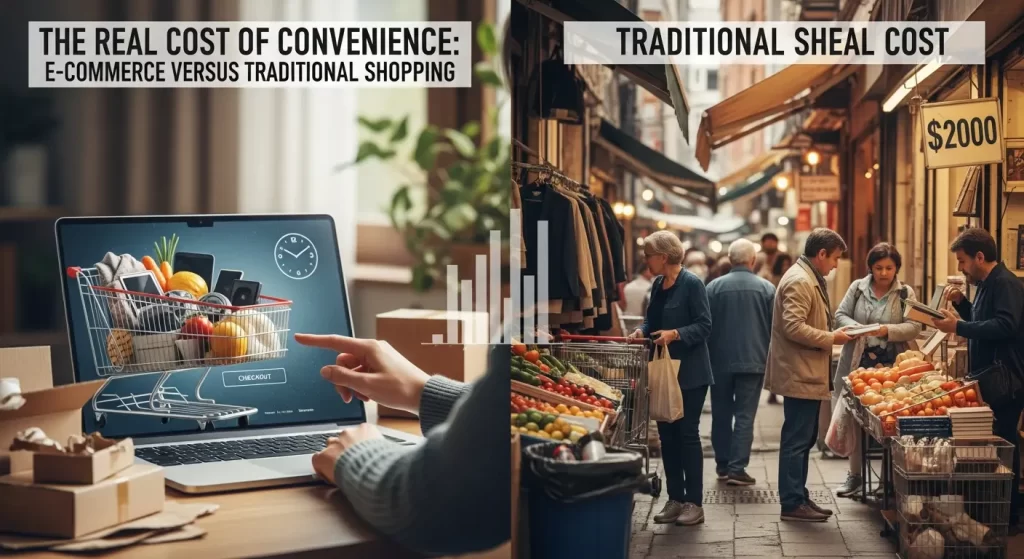
Think about two different ways to get the same food. One through apps for quick shopping. One through traditional shopping or supermarkets. Would prices match? No. Would selection matter? Absolutely. Time saved? Definitely.
In the past, quick commerce charged about 10 to 15 percent more for the service because instant delivery was more convenient, but it also cost a lot to send small packages, so customers paid more for it.
That’s significant. But competition is changing this. As more platforms launch, prices are aligning. Still, gaps remain. Strategic items cost more. Essential products vary across platforms. Understanding these differences matters enormously.
What You’re Actually Buying When You Order Fast
Here’s what most people overlook: the infrastructure behind fast delivery. Quick commerce operates through hyperlocal models, relying on strategically located dark stores, micro-warehouses, and advanced logistics networks that keep high-demand items stocked close to consumers.
Those dark stores need rent. Those delivery workers need payment. That technology infrastructure needs investment. Someone bears these costs. Often, the customer does. Sometimes through higher prices. Sometimes through delivery fees. Sometimes through both.
Unlike traditional e-commerce, pricing in quick commerce must account for speed and convenience, with customers often accepting higher prices in exchange for faster delivery.
That’s the trade-off. Explicit. Clear. You pay more. You wait less.
The Time Equation: Is it Worth Your Money?
Time savings are real. Nobody disputes that. Fifteen minutes versus ninety minutes? That’s substantial. But here’s what matters: valuing your time honestly.
Saving ninety minutes involves transportation time, waiting time, potential crowding, navigation through stores. That’s genuine relief. But does it justify premium pricing? That depends on your budget, your time, and your top goals.
People are much more likely to buy everyday things online instead of in stores because it’s easier and takes less time.
But buying things on a whim hurts income. That’s where quick shopping really shines at making people buy things they don’t need. Quick commerce makes it easy to “buy now, think later” by using app-based prompts and being convenient. Unplanned impulse purchases are what make these platforms grow.
You made time. You didn’t mean to spend that much money. Did you win? Probably not.
Hidden Costs Nobody Discusses
Subscription fees. Delivery minimums. Surge pricing during peak hours. Premium charges for specialty items. These accumulate. Invisibly.
You also lose the comparison-shopping benefit. Walking through supermarkets lets you compare brands, check alternatives, spot better deals. App shopping? You tap. You buy. You move on. Convenience kills comparison.
Quick commerce encourages impulse-driven, need-based shopping with minimal browsing and comparison, with purchases tending to be small baskets and spur-of-the-moment decisions.
There are costs to such change in mindset. Costs that are real and can be measured.
The Environmental Paradox
Here’s something most people don’t think about: Quick commerce has clear benefits, but it also has big environmental costs. Delivery riders’ carbon emissions, costly logistics that clog up streets, and more packaging waste all hurt the planet.
Every order comes with packaging. Every delivery produces emissions. Multiply that across thousands of daily orders. The environmental footprint is substantial.
Traditional shopping involves one trip. One vehicle. Quick commerce involves dozens of trips daily. Someone’s environmental burden increased. Usually invisibly.
When Quick Commerce Makes Sense
Not all quick commerce is wasteful. Emergency needs? Legitimate. Late-night necessities? Valid. Truly unexpected shortages? Reasonable.
But replacing regular shopping with app ordering? That’s different. That’s convenience becoming habit. Habit becoming expensive.
Quick commerce works well for urgent needs and last-minute buys, perfect for when consumers don’t need to plan shopping or worry about running out of essential items.
Use it occasionally. Use it wisely. Use it for genuine emergencies. Don’t use it to replace all traditional shopping.
Making Your Choice: Practical Tips
Calculate your actual time value. What’s your hourly rate? Is saving ninety minutes worth that premium? Honestly? No? Then reconsider.
Track impulse purchases. Monitor spending. Notice patterns. Many discover app shopping costs significantly more despite saving time.
Combine both approaches. Weekly supermarket shopping for staples. Apps for genuine emergencies. Balance. That’s the key.
Understand what’s truly urgent. Most grocery needs aren’t. They’re convenient reframing of actual needs.
Conclusion
Convenience is seductive. Speed feels productive. But productivity without economy is just expensive habit-formation.
Quick commerce isn’t evil. It’s genuinely useful for actual emergencies. But using emergency services for routine shopping? That’s not convenience. That’s costly habit.
The real savings come from intentional shopping. Planned purchases. Comparison. Thoughtfulness. Those methods require time. But they preserve money.
Your choice. Your time. Your money. Your responsibility.
The Real Cost of Convenience: e-Commerce versus. Traditional Shopping