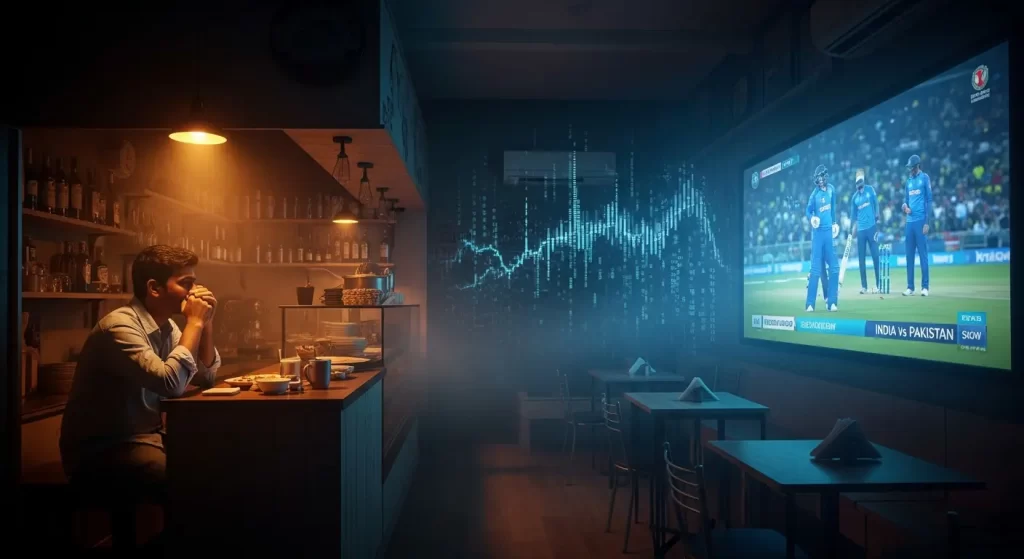
The match started at 7 PM. By 7:15 PM, I was staring at my phone in disbelief.
India vs Pakistan. The kind of match where the entire country stops breathing. My cafe was packed. But nobody was ordering delivery.
And that’s when I understood: an algorithm had decided to tax cricket fans. And I was the one losing money.
The Moment I Got Angry
At 6:55 PM, I had hope. Twenty minutes before the match, my cafe was buzzing. People arriving, sitting, phones out, ready to order.
I pulled up Swiggy to check delivery fees. Habit. I do this every evening.
A coffee delivery that costs ₹30 on normal days was showing ₹95.
I thought my phone glitched. So I checked Zomato.
₹120.
For the same 2-kilometer radius. Same distance my delivery guy covers. Same café. Same everything.
Except it was 7 PM on a cricket match day.
The algorithms had woken up. And they decided to multiply prices by 4x.
I just… stared at the screen.
Four hours. That’s how long the match would last. Four hours of this pricing. Four hours where my delivery revenue would probably evaporate.
The Hour-by-Hour Nightmare
I did something I’ve never done before. I obsessively tracked the surge pricing every single hour. Because I needed to understand the math of how much I was losing.
7:00 PM – Match starts: Swiggy: ₹95 Zomato: ₹120 Normal: ₹30
I watched the first over. I watched my delivery fee numbers.
8:00 PM – First blood: Swiggy: ₹110 Zomato: ₹130
The surge was still climbing. The algorithms weren’t done yet.
I checked my orders. 8 total from the 7-8 PM window.
On a normal Sunday, I’d have 12-15 in that slot.
9:00 PM – Peak chaos: Swiggy: ₹125 Zomato: ₹140
This was the highest. India was either winning or losing dramatically. I couldn’t remember which because I was too busy watching my delivery fees.
I checked orders again. Three. Just three orders in the busiest hour of the evening.
That’s when it hit me: people were choosing not to order because delivery cost more than the food itself.
10:00 PM – The decline: Swiggy: ₹85 Zomato: ₹100
The surge was dropping. The algorithms had already calculated that the match was ending. Demand was about to crash. Why charge ₹125 when you can charge ₹85 and still maximize profit?
Five more orders came in this hour. But it was too late.
11:00 PM – Match ends: Swiggy: ₹45 Zomato: ₹55
Back to nearly normal. The event was over. The economic extraction had finished.
The Numbers That Broke My Heart
I did the math that night. Sitting alone in my cafe. After everyone had left.
Normal Sunday: 30 orders between 7-11 PM.
Match day with surge pricing: 14 + 8 + 3 + 5 = 30 orders.
Wait. Same number of orders?
No. Different quality. Different margins.
Normal Sunday: ₹15 per order × 30 orders = ₹450 in delivery revenue for me.
Match day: The surge pricing meant higher commissions to the app. Lower percentages for restaurants like mine.
Actual revenue I made: ₹180.
I lost ₹270.
That’s not a number. That’s a utility bill I didn’t pay. That’s the stocking I didn’t do. That’s the delivery person I didn’t hire.
That’s real money. That I lost. Because an algorithm decided cricket fans would pay 4x for delivery.
And the algorithm was right. Because they did.
What Actually Happened to My Customers
Here’s what I watched happen, table by table:
A couple came in at 8 PM. Ordered coffee. Wanted to send some to friends.
I showed them the delivery cost: ₹110 for something that normally costs ₹30.
They said no. They drank their coffee and left.
A group of young people came in at 9 PM. They were screaming about the match. Wanted snacks delivered to their hostel.
I told them: ₹140 delivery fee.
They looked at each other. Laughed. Said they’d just watch hungry.
An older man asked me at 10 PM: “Why is delivery so expensive?”
I told him it’s a cricket match. Demand is high. Apps charge more.
He said: “That’s not fair. I ordered anyway because I wanted to eat. But it’s not fair.”
He was right. It wasn’t fair.
The System’s Brutal Honesty
Here’s what nobody wants to admit:
Swiggy and Zomato make money during cricket matches. I lose it.
When demand goes up 4x, prices go up 4x. The apps pocket everything.
I’m paid the same commission percentage. But that percentage suddenly means less absolute money because fewer people order when prices are insane.
It’s mathematically perfect. It’s morally broken.
The algorithms aren’t evil. They’re just optimizing. And optimizing means: extract maximum value when demand is inelastic.
During a cricket match, people don’t have many options. Either pay 4x or don’t eat.
The apps knew this. And they charged 4x.
The Thing That Still Bothers Me
The algorithm was right.
That’s what bothers me most.
People did pay 4x. My order count didn’t drop to zero. It dropped 60%. Meaning 40% of customers paid the inflated price anyway.
Because they were watching a cricket match and wanted comfort food.
The algorithm identified that willingness to pay and exploited it.
That’s not theft. It’s not even illegal.
It’s just… efficient extraction of value during moments when people are emotionally vulnerable.
Cricket fans aren’t thinking about delivery fees. They’re thinking about the match. The app exploits that inattention.
Restaurants like me catch the fallout.
What I Realized That Night
I sat in my empty cafe at midnight, staring at ₹270 missing from my accounts.
An algorithm had just decided my revenue for the evening. Not demand. Not quality. Not service.
An algorithm.
And the algorithm decided: during cricket, we charge 4x and pocket the difference.
It wasn’t personal. It was perfectly rational.
That’s what makes it so terrifying.
The Part That Keeps Me Awake
I’m a small cafe owner. This match cost me ₹270.
Multiply that across the city. Every restaurant. Every small business that depends on delivery orders.
Thousands of cafes lost thousands of rupees during one match.
Those thousands of rupees went to two apps.
An entire country’s cricket passion was monetized by algorithms that have no stake in whether my business survives.
I’m still here. I’ll survive this.
But what about the cafe owner with ₹500 daily margins? What about the person who was banking on delivery orders to cover rent?
The Cricket Tax doesn’t just hurt restaurants. It hurts the people depending on them.
Tell Me Your Story
Did you order delivery during the match? Did you see the surge pricing and order anyway?
Or did you watch hungry because the delivery cost was absurd?
Were you running a restaurant? Did you watch your orders disappear in real time?
Because I need to know I’m not the only person noticing this.
That an algorithm somewhere is making money while we lose it.
And that nobody’s talking about it.