If you feel like your brain has been “fried” by the last few years of infinite scrolling and AI-generated noise, you aren’t alone. In fact, you’re part of the biggest lifestyle shift we’ve seen in a decade.
As we move through 2026, a strange thing is happening. The people who were the earliest adopters of every new app and gadget are now the ones leading the charge away from them. We call it Digital Slow Living. It’s not about living like a monk or throwing your laptop in the river; it’s about finally setting boundaries with a world that wants your attention 24/7.
Here’s why “Less is More” has become the ultimate status symbol this year.
1. The Rise of the ‘Dumb’ Interface
Remember when a phone that did “everything” was the goal? In 2026, the trend has flipped. We’re seeing a massive comeback of minimalist devices—phones with E-ink screens (like a Kindle) that only handle calls, texts, and maps. By removing the “dopamine loops” of social media apps, people are finding they suddenly have three extra hours of focus every day. It turns out, your brain was never broken; it was just overstimulated.
2. Deep Work Over ‘Busy’ Work
In the age of AI, “being busy” is no longer a flex. A machine can be busy much faster than you can. The only thing humans can still do better than AI is Deep Work—the kind of intense, creative focus that requires zero distractions. The most successful people I know in Pune right now aren’t the ones who reply to emails in five seconds; they’re the ones who go “offline” for four hours every morning to actually build something meaningful.
3. The ‘Analog’ Weekend
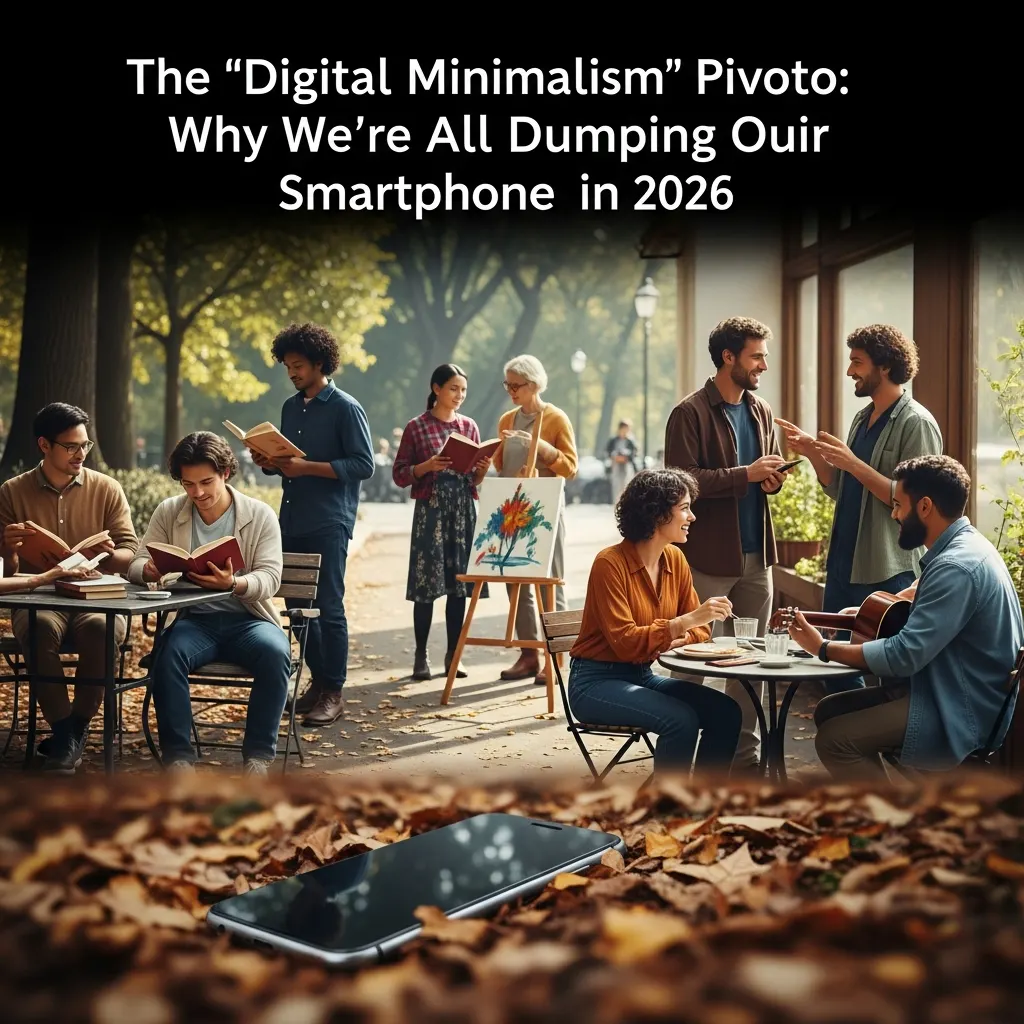
We’ve reached a breaking point with digital entertainment. In 2026, “luxury” is no longer a 100-inch TV or a VR headset. Luxury is a physical book, a real vinyl record, or a hike where you don’t take a single photo for Instagram. There is a growing movement of “Phone-Free Zones” in cafes and parks. We’re relearning how to look at the world with our eyes instead of our lenses.
4. Curation Over Consumption
The “infinite scroll” is dying. Instead of letting an algorithm decide what you see, people are moving back to intentional curation. This means following only 50 people instead of 500, subscribing to two high-quality newsletters instead of browsing a newsfeed, and choosing quality over quantity. In 2026, your “Digital Diet” is just as important as your physical one.
How to Reclaim Your Brain This Week
You don’t have to delete your accounts to feel the difference. It’s about taking back the steering wheel.
- The 8-to-8 Rule: No screens before 8 AM and no screens after 8 PM. Give your brain a “buffer zone” to wake up and wind down naturally.
- The ‘Grayscale’ Hack: Turn your phone screen to black and white. It sounds silly, but it makes those colorful icons way less “addictive” to your brain.
- Build an ‘Analog’ Corner: Designate one spot in your home—a chair, a balcony, a desk—where electronics are strictly forbidden. Use it only for thinking, reading, or just being.
The Bottom Line
The last ten years were about how much tech we could fit into our lives. The next ten will be about how much we can live without. In 2026, the most powerful thing you can do is be unreachable for a little while.