
Your resume is your first impression. And honestly? In today’s job market, that impression can literally make or break everything. But here’s what keeps most job seekers tossing and turning at night: does the actual design of your resume matter, or is it really just about what you write?
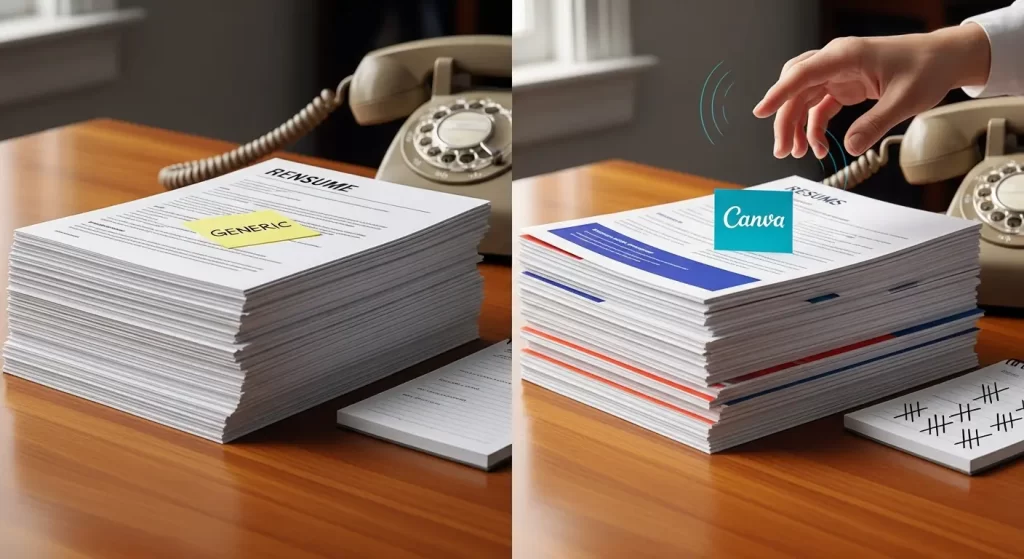
I got tired of the debate. So I did something crazy—I applied to 50 real jobs using two completely different resumes. One was your standard, boring black-and-white format. The other? A visually stunning Canva creation with colors, icons, and all the modern design bells and whistles.
The results shocked me.
What I Actually Did
Here’s how I set this whole thing up. I applied to 50 jobs total—25 with each resume type. Took about six weeks. I targeted stuff in digital marketing, content writing, social media management, and marketing coordinator roles. Entry to mid-level positions mostly, the kind that want 2-5 years experience.
Everything else was identical. Same work history. Same skills. Same achievements. Same keywords for those annoying applicant tracking systems. I even used the same cover letter template when companies asked for one.
The only difference? How the resume looked.
The Two Resumes
My generic resume was… well, generic. Black text on white paper. Times New Roman for headings, Arial for everything else. Contact info at top, then Summary, Work Experience, Education, Skills. Basic bullet points. No graphics or anything fancy. Just the kind of resume your college career center would approve of without blinking.
The Canva resume was different. Way different.
It had a two-column layout with this nice navy blue sidebar. Modern fonts throughout—I used Montserrat because it looks clean and professional. Little icons next to my contact details and skills section. Color-coded headers that actually drew your eye to important stuff. I added small bar graphs to show skill levels, included a professional headshot, and used white space strategically so it didn’t feel cramped.
Still professional. But definitely more eye-catching.
The Numbers Don’t Lie
After six weeks of checking my email obsessively, here’s what happened.
Generic resume: 4 callbacks out of 25 applications. That’s 16%. That’s 36%. Average wait time was just 8 days.
Yeah. The Canva resume got more than double the responses. A 125% increase, to be exact. And people got back to me faster too.
When I broke it down by industry, digital marketing agencies were the biggest difference. The generic resume got me 1 callback out of 8 tries—that’s 12.5%. The Canva resume? 4 out of 8, which is 50%. Huge difference.
There were similar tendencies in employment that involved writing material. Generic got 2 responses out of 7 applications (28.5%), and Canva got 3 out of 7 (43%). The similar thing happened with social media positions.
The only category where neither resume worked? Marketing coordinator positions at big corporations. Zero callbacks for both. Guess those places have their own systems.
Why This Happened
Look, recruiters spend like 6 or 7 seconds scanning your resume initially. That’s it. In that tiny window, a well-organized, visually appealing resume just works better. The eye naturally goes where you want it to go.
Industry expectations matter too. Your resume serves as a representation of your work when applying for positions in creative fields or digital marketing. That you may employ contemporary design principles to pique readers’ attention in your material is evident.
The Canva CV worked because it looked professional, not because it was flashy. Not everything that is “well-designed” is “trying too hard.”