
In the past, it was easy to guess who would win the Nobel Peace Prize. Serious faces. Long careers. Leaders who had spent decades negotiating treaties, sitting in conferences, and slowly shaping policy. The prize often arrived at the end of a journey, almost like a lifetime achievement badge.
Then one year, everything felt different.
A young girl walked onto the stage. Still a student. Soft-spoken but unshakable. When Malala Yousafzai received the Nobel Peace Prize, it wasn’t just inspiring. It was disruptive. People applauded, but many also paused. Was this a symbolic exception, or a sign of something bigger changing?
That question stayed with me. So instead of rereading the same old winner lists, I tried a different approach. I looked at age. Just age. Because sometimes numbers quietly tell stories that words miss.
Most articles about the Nobel Peace Prize feel… flat. They list winners. Add a paragraph. Move on. Respectful, yes. Insightful, not always. What’s missing is movement. A sense of how the prize itself evolves with the world. That’s where data comes in.
I collected information directly from the official Nobel sources. Year of award. Winner’s name. Age at the time of winning. No opinions. No theories. Just facts. Then I dropped everything into a spreadsheet. Simple rows. Nothing fancy. But once it was all laid out, patterns started forming almost on their own.
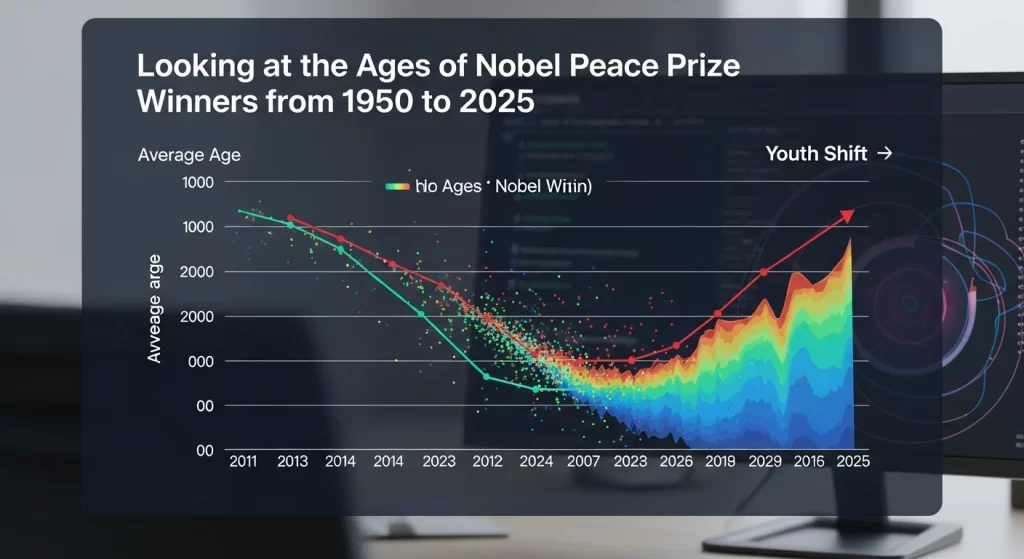
To make sense of it, I split the data into two broad eras. One from the mid twentieth century to around the early nineties. The other from the nineties to the mid twenty twenties. When you calculate the average ages for these periods, the difference is striking.
Earlier decades were dominated by older winners. Diplomats. Politicians. Institutional leaders. People who worked within systems for most of their lives. Peace, back then, was negotiated in closed rooms.
The later period looks very different. The average age drops. You start seeing activists. Campaigners. Individuals driven by causes rather than offices. Peace becomes louder. Public. Emotional. Shared online. And younger voices begin to matter more.
This is where the so-called “Malala Effect” fits. She didn’t create the shift, but she became its clearest symbol. Around the same time, the Nobel Committee began recognising people who represented movements, not just milestones. Youth activism. Education rights. Climate voices. Human rights defenders who weren’t waiting for permission.
The data also raises an interesting tension. Older winners still appear, but often as part of formal peace processes. Younger winners, on the other hand, tend to represent urgency. Ongoing struggles. Work that’s unfinished and deliberately uncomfortable.
Maybe that’s the real change.
The Nobel Peace Prize is no longer just about rewarding completed peace. It’s about spotlighting moral pressure. Direction. Momentum. It’s choosing voices that force the world to pay attention now, not later.
So what does this mean going forward? If this youth shift continues, future winners may be recognised earlier, while they’re still fighting. Still growing. Still learning. That’s powerful. And risky. But also very human.
Peace, it turns out, doesn’t always come with age. Sometimes it comes with courage. And courage, more often than not, shows up young.