
Which Neighborhoods Cast the Highest NOTA Votes and Why?
Every election in Pune follows a familiar script. Loud rallies. Exit polls. Victory speeches. Analysts arguing on TV till midnight. Winners everywhere.
But there’s a quieter choice that never gets a headline. NOTA. None Of The Above.
It doesn’t win seats. It doesn’t change governments overnight. Still, it matters. A lot more than we admit.
Because when someone presses NOTA, they didn’t stay home. They showed up. They waited. They looked at the options. And they rejected all of them.
That’s not indifference. That’s frustration.
The Vote Nobody Wants to Talk About
Political conversations usually revolve around who beat whom. Margins. Swing votes. Party math. The NOTA number gets mentioned, maybe, then ignored.
Which is strange. Because NOTA is feedback. Raw. Unfiltered.
It tells you something is broken. Candidate quality. Local issues. Trust. Sometimes all of it.
Yet very few people bother to ask where these votes are coming from. And why.
Digging Into the Data That’s Already Public
The Election Commission quietly publishes booth-wise results for every election. It’s all there. Every polling station. Every vote. Including NOTA.
Downloading it isn’t exciting. Cleaning it takes time. But once you calculate NOTA as a percentage of total votes for each neighborhood, patterns start forming.
Clear ones.
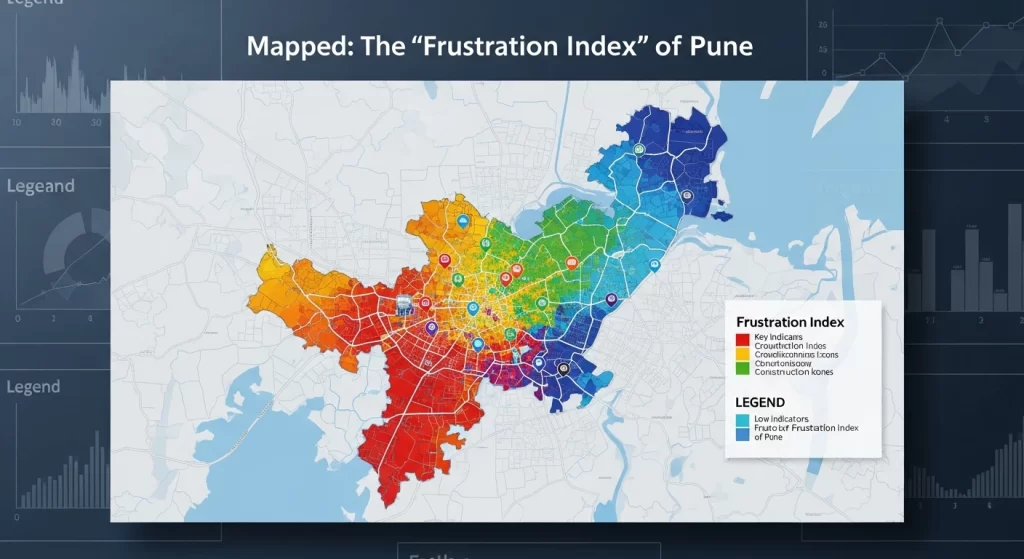
This is what we call the Frustration Index. Higher the NOTA percentage, deeper the dissatisfaction.
Pune Neighborhoods Where NOTA Spoke Loudest
Viman Nagar jumps out early. Educated voters. Young professionals. High turnout. And still, a noticeable chunk chose NOTA. Conversations here usually drift toward traffic chaos, half-finished infrastructure, and leaders who appear only during elections.
Kharadi tells a similar story. Shiny offices. Growing population. But basic civic systems struggling to keep pace. Voters didn’t swing to an alternative. They opted out.
Hadapsar feels different. More fatigue than anger. Long-pending local problems. Roads. Water. Transport. NOTA here feels like exhaustion.
Aundh surprises people. Politically aware. Vocal residents. Yet frustration crept in. Likely less about parties, more about uninspiring candidates.
Yerwada completes the picture. Dense population. Administrative neglect. A sense that nothing changes regardless of who wins.
Different local issues. Same silent protest.
What High NOTA Really Means
NOTA doesn’t mean people don’t care. It means they care enough to say no.
No to weak candidates. No to empty promises. No to being taken for granted.
When NOTA competes with mainstream candidates in urban pockets, it’s a warning sign. Not noise.
Why This Can’t Be Ignored
Areas with high NOTA are early indicators of political disengagement. Today it’s a rejected ballot. Tomorrow it’s lower turnout. After that, deeper cynicism.
Parties that read this data properly can fix things. Better candidates. Local accountability. Real engagement.
Those who don’t will keep winning elections and slowly losing cities.
Final Thought
NOTA votes don’t shout. They sit quietly in spreadsheets. But they tell a very human story. Of disappointment. Of unmet expectations.
Pune’s frustration index isn’t about rebellion. It’s about trust slipping away.
And once trust goes, winning becomes meaningless.