I gave a presentation last week. Stumbled on a word. Said “uh” instead of “um.” My face turned red.
I was convinced everyone noticed. That they’d remember me as the person who couldn’t speak smoothly.
Three days later, I ran into someone from that meeting. “Hey! Great presentation,” she said.
She didn’t remember the stumble. She barely remembered my name.
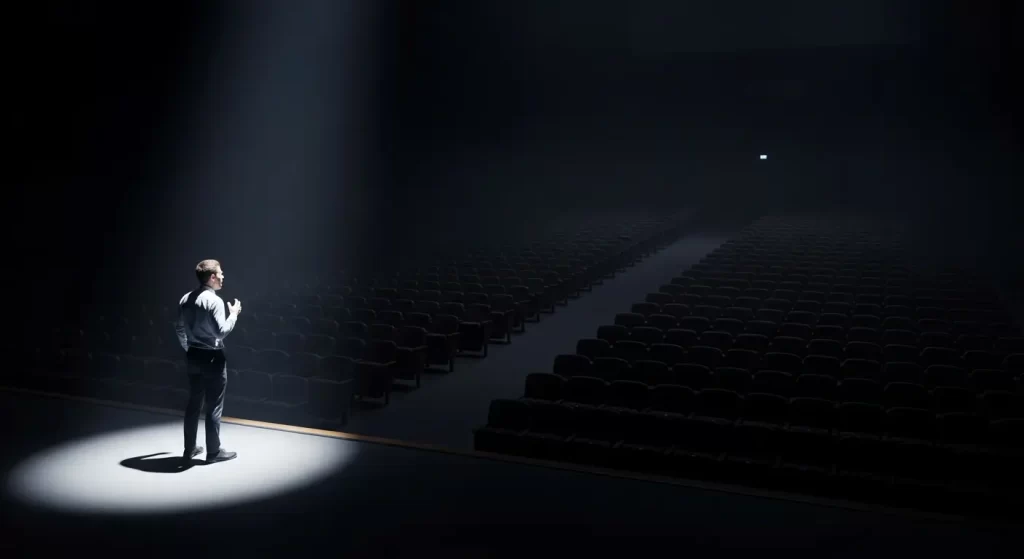
That’s the Spotlight Effect. And it’s destroying our mental health.
What the Spotlight Effect Actually Is
The Spotlight Effect is a cognitive bias. We believe people are paying way more attention to us than they actually are.
You wear something unusual. You’re convinced everyone’s staring.
Reality: They’re thinking about their own lunch plans.
You make a social mistake. You imagine people replaying it for days.
Reality: They forgot about it within hours.
We’re all walking around believing we’re the main character of other people’s movies. But actually, everyone else is the main character of their own.
Social media has made this worse. We curate highlight reels. We see everyone else’s highlight reels. We believe we’re competing in an aesthetic Olympics where everyone is judging everyone.
They’re not.
The Pressure to Be Perfect
Instagram exists because we need to show we have our lives together.
Perfect lighting. Perfect outfit. Perfect caption. Perfect life.
Meanwhile, behind that photo, someone’s having a panic attack about whether they should have eaten that cookie.
I watched a friend spend 45 minutes editing a photo for Instagram. The photo was her having coffee. Coffee. Forty-five minutes to make coffee look perfect.
Why? Because the Spotlight Effect made her believe that everyone would notice if the cup wasn’t centered correctly. That people would judge her for the angle of her hand.
Nobody would. Nobody did.
But she believed they would. So she spent 45 minutes editing a cup of coffee.
That’s not living. That’s performing.
The Psychology of Invisible Judgment
The Spotlight Effect thrives on social media because social media is designed to feel like constant judgment.
The like button is literally a judgment tool. The comment section is where judgment lives.
So we avoid posting anything that could be judged. We hide our struggles. We hide our messiness. We hide our humanity.
We believe that if we show one crack in the perfect image, people will judge us forever.
But here’s what research actually shows: People notice our flaws only about 50% of the time we believe they do.
You’re worried about that comment you made? They didn’t hear it.
You’re anxious about your appearance? They didn’t notice.
You’re convinced your mistake was catastrophic? They forgot about it.
The Pratfall Effect (The Plot Twist)
Here’s the thing that psychology discovered that contradicts the Spotlight Effect:
People actually trust you MORE when you mess up.
This is the Pratfall Effect. Minor mistakes make you seem more human. More relatable. More trustworthy.
The perfect person is intimidating. The person who stumbles on a word is real.
Research shows that people like people who admit imperfection. Who show vulnerability. Who are clearly just trying their best and messing up sometimes.
So the thing we’re most afraid of—being seen as flawed—is actually the thing that makes people like us more.
We’re running from the very thing that would save us.
The Actual Truth
You’re not the main character of anyone else’s movie. You’re an extra in theirs.
And they’re an extra in yours.
That stumble you made? They forgot about it.
That post you’re anxious about? Most people won’t see it.
That imperfect thing you’re hiding? Would make people trust you more if you showed it.
The Spotlight Effect is real. It’s a genuine cognitive bias. But it’s also a lie your brain tells you for protection.
The protection isn’t working. It’s just making you miserable.
What Changes Everything
Stop curating. Start living.
Show the unmade bed. Show the failed recipe. Show the day you didn’t accomplish anything.
The people worth knowing will like you more for it.
The people judging you? They were going to judge anyway. And they’re probably too focused on their own Spotlight Effect to actually notice you.
We’re all walking around convinced we’re being watched. But really, we’re all too busy worrying about being watched ourselves.
So here’s the paradox: The moment you stop performing for an audience that isn’t watching, you become genuinely interesting to the people who are.