we live in a world that is obsessed with eating. From the moment we wake up to that late-night snack while watching Netflix, we are constantly told to keep our metabolism “stoked” with three square meals and snacks in between. The idea of voluntarily skipping food for a day (or even just skipping breakfast) sounds a bit crazy to most people. It feels like starvation.
But here is the thing we often forget: our bodies weren’t built for 24/7 drive-thrus and stuffed refrigerators. For most of human history, our ancestors dealt with feast and famine. Because of that, our biology is actually designed to thrive when food isn’t coming in. In fact, Dr. Eric Berg argues that when we constantly graze, we miss out on a massive hidden healing system that only switches on when we stop chewing.
Fasting isn’t just about dropping a few pounds or fitting into old jeans. It’s a biological reset button. When you stop eating, your body doesn’t just sit there waiting for the next sandwich; it gets to work repairing years of damage. Let’s walk through the timeline, because the changes that kick in between 12 and 72 hours are nothing short of incredible.
The 12-Hour Mark: The Fountain of Youth
The first big shift happens about 12 hours after your last meal. So, if you finish dinner at 8 PM, you hit this zone by 8 AM the next morning.
At this point, the signal to “store fat” shuts off, and the machinery to “burn fat” wakes up. But the real star here is Growth Hormone (GH). In the medical world, people pay thousands of dollars for synthetic versions of this stuff to look younger or recover from injuries. Your body, however, gives it to you for free just for skipping breakfast.
Growth Hormone is the ultimate anti-aging tool. It protects your muscles from wasting away, helps burn fat, and starts healing joints. As you enter this phase, your body basically says, “Okay, no food coming in? Time to preserve the muscle we have and burn the fat reserves instead.”
The 18-Hour Mark: Taking Out the Trash
If you can push a little longer—skipping lunch and waiting until early afternoon—something called Autophagy kicks into high gear.
Think of autophagy as a deep-cleaning crew for your cells. The word literally means “self-eating,” which sounds gross, but it’s actually brilliant. Over time, our cells get cluttered with junk—damaged proteins, broken parts, and waste. Dr. Berg talks about “AGEs” (Advanced Glycation End-products). Imagine these like sticky, caramelized gunk that clogs up your tissues and makes things stiff and aged.
At the 18-hour mark, your body starts recycling this trash. It hunts down those sticky proteins, clears out amyloid plaques (the stuff linked to brain issues), and even breaks down microbes hiding inside your cells. It doesn’t just toss them out; it breaks them down into raw materials to build shiny, new cellular machinery. It’s the ultimate recycling project.
The 24-Hour Mark: The Hybrid Engine
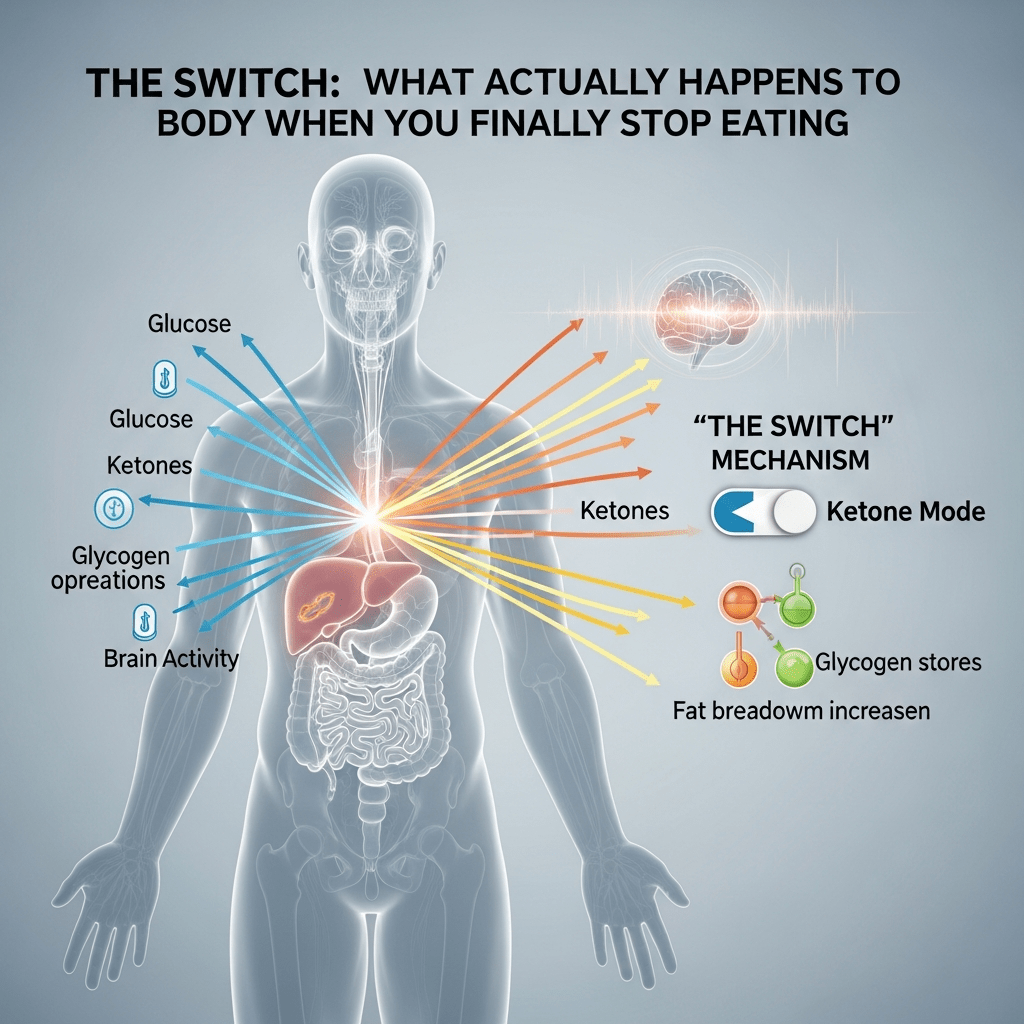
Once you cross the 24-hour line, things get really interesting. By now, your liver has run out of its usual sugar supply (glycogen). It has no choice but to switch fuel sources entirely. You go from running on “gasoline” (sugar) to running on “battery power” (fat).
This is where Ketones enter the picture.
Ketones are a super-fuel. They burn cleaner than sugar, producing less waste and demanding less oxygen. This is why people often say their brain feels sharper or “lighter” during a fast. Speaking of the brain, this phase triggers a protein called BDNF, which actually helps your brain grow new neurons.
But there’s a gut benefit here, too. Since your digestive system finally gets a day off—no enzymes to produce, no gallbladder work—the stem cells in your gut activate. This is huge for anyone dealing with bloating, SIBO, or gut inflammation. The body finally has the bandwidth to heal the lining of your stomach because it isn’t busy digesting lunch.
Also, you might notice you feel surprisingly calm. That’s because ketones help suppress hunger and boost GABA, a neurotransmitter that relaxes the brain. So, oddly enough, you might feel less hungry at 24 hours than you did at 12.
The 48-Hour Mark: The Deep Repair
If you keep going for two days, you enter the territory of serious regeneration. This is where stem cell activity really ramps up.
Stem cells are the body’s shapeshifters—they can turn into whatever tissue needs fixing. At 48 hours, your body is in full-blown repair mode. It’s also aggressively hunting down “rogue” cells. Cancer cells and precancerous cells love sugar; they hate the fasting environment. By cutting off their fuel supply and ramping up the immune cleanup crew, you’re creating an internal environment that is hostile to disease.
And don’t worry about your muscles wasting away. The body is smart. It holds onto your good muscle tissue for dear life and only scavenges the old, broken proteins we talked about earlier.
A Few “Human” Warnings
Now, before you jump into a 3-day fast, let’s be real about the practical side. You can’t just stop eating and expect to feel amazing if you aren’t prepared.
Don’t Fear the Dawn: You might check your blood sugar in the morning and see it’s high, even though you haven’t eaten. Don’t panic. This is just the “Dawn Phenomenon.” Your body releases cortisol in the morning to wake you up, which releases a little stored sugar. It’s normal.
Cholesterol might go up: And that’s okay. As your body breaks down fat cells, cholesterol is released to be used for healing cell membranes. It’s part of the repair process, not a sign of heart disease.
Salt is your best friend: If you feel dizzy, tired, or get a headache, you probably aren’t “starving”—you’re just low on electrolytes. When you don’t eat, you dump water and minerals. Putting some sea salt in your water can fix how you feel almost instantly.
The Bottom Line
You don’t need to do a 72-hour fast every week to see benefits. In fact, Dr. Berg suggests that for most of us, an “18:6” schedule (fasting for 18 hours, eating in a 6-hour window) is the sweet spot. It gives you that daily dose of autophagy and keeps the anti-aging growth hormone pumping.
Fasting isn’t about punishment. It’s about giving your body the downtime it desperately needs to do the maintenance work it can’t do when we are constantly feeding it. It’s free, it’s built into our DNA, and it might just be the most powerful health tool we have.
The Switch: What Actually Happens to Your Body When You Finally Stop Eating