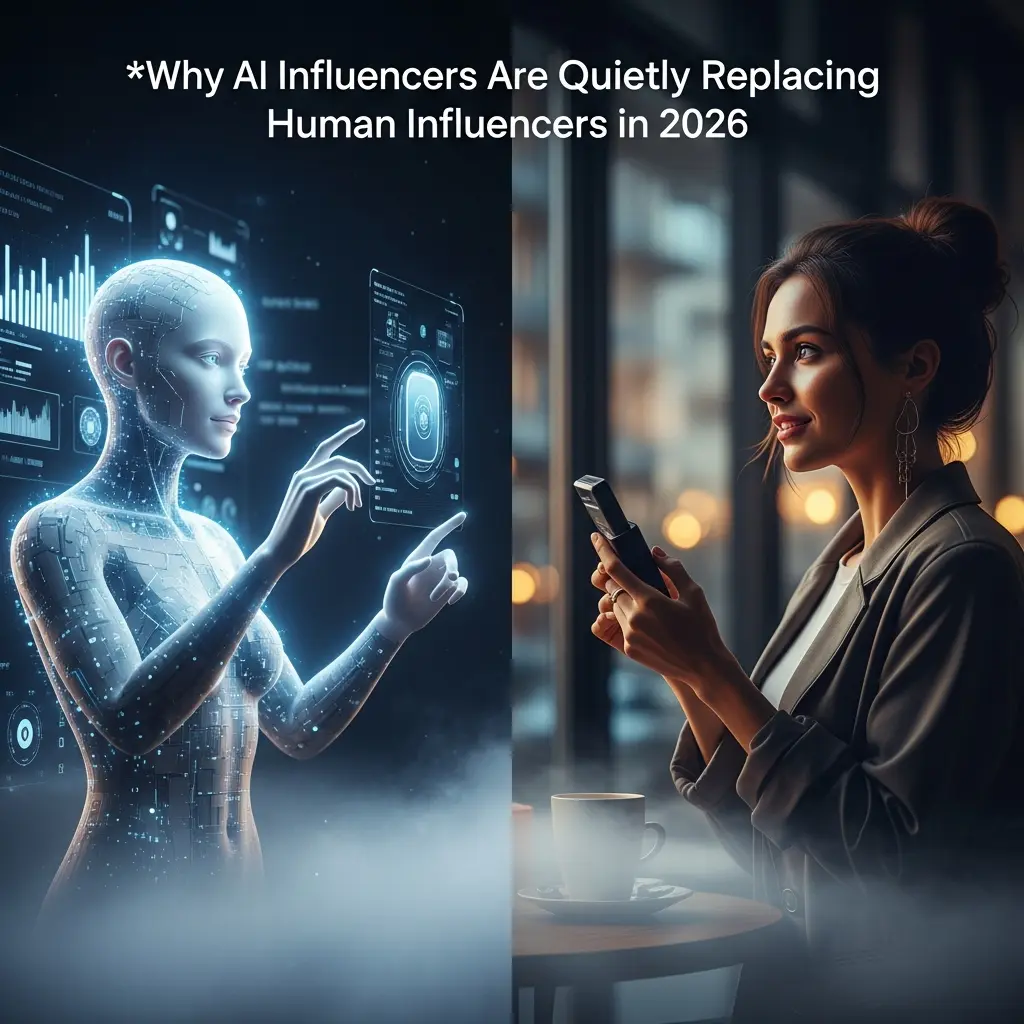
Scroll through Instagram, YouTube, or TikTok for just five minutes, and there’s a good chance you’ve already seen an AI influencer without realizing it.
She looks real.
She talks like a real person.
She posts daily.
She replies to comments.
She promotes brands.
But she doesn’t exist.
And that’s exactly why brands are investing millions into virtual creators in 2026.
The influencer industry is changing faster than most people understand. While many creators are still trying to beat algorithms, a new type of influencer is already dominating engagement, consistency, and marketing performance.
The scary part?
Most audiences don’t even care whether the creator is human anymore.
The Rise of AI Influencers
A few years ago, AI influencers felt like internet experiments. They looked robotic, awkward, and obviously fake.
Today, that line is disappearing.
Modern AI influencers can:
Generate ultra-realistic photos
Create lip-synced videos
Speak in multiple languages
Post content 24/7
Adapt their personality based on audience behavior
Never age, cancel, or take breaks
For brands, this sounds almost perfect.
No scheduling problems.
No controversies.
No creative burnout.
No unpredictable behavior.
Just endless content.
That’s why companies are quietly shifting budgets away from traditional influencers toward AI-generated personalities.
And honestly, most users can’t tell the difference anymore.
Why Brands Love AI Influencers
Traditional influencers are expensive.
A single viral creator can charge lakhs—or even crores—for one campaign. On top of that, there’s always risk:
PR scandals
Missed deadlines
Audience backlash
Sudden drops in engagement
AI influencers eliminate almost all of those problems.
A virtual creator can:
Work nonstop
Instantly adapt to trends
Be redesigned anytime
Fit any brand identity
Speak to global audiences
Imagine creating one influencer who can target:
Indian audiences in Hindi
US audiences in English
Japanese audiences in Japanese
All from the same digital personality.
That’s already happening.
People Are Forming Emotional Connections With AI
This is where things get strange.
Studies and social behavior trends show that people are emotionally connecting with AI personalities almost the same way they connect with real creators.
Why?
Because audiences don’t only follow influencers for reality anymore.
They follow:
Entertainment
Escapism
Aesthetic lifestyles
Relatable emotions
Storytelling
If an AI influencer provides all of that consistently, people stay engaged.
In fact, many AI creators are more “perfect” than human creators:
Better visuals
Cleaner branding
More polished personalities
Constant uploads
The internet rewards consistency more than authenticity now.
And AI is unbeatable at consistency.
The Dark Side Nobody Talks About
There’s a growing problem hidden underneath this trend.
As AI influencers become more realistic, audiences may completely lose the ability to distinguish:
Real experiences
Scripted emotions
Artificial personalities
Fake lifestyles
That creates a dangerous online culture where perfection becomes fully manufactured.
Teenagers especially are becoming vulnerable to impossible beauty standards created entirely by AI.
Imagine comparing your real life to a person who literally does not exist.
That pressure is becoming very real.
Human Influencers Are Starting to Feel the Pressure
Many creators are already noticing engagement drops.
Why?
That doesn’t mean human creators will disappear.
But it does mean creators must now compete on something AI still struggles with:
Genuine human experience.
Real emotions.
Real stories.
Real struggles.
Real unpredictability.
Ironically, being imperfect may become the biggest advantage humans have left online.
The Future of Content Creation
The future probably won’t be “humans vs AI.”
It will be humans working with AI.
Creators who survive this shift will likely:
Use AI for editing
Use AI for scripting
Use AI for thumbnails
Use AI for content ideas
Use AI for automation
But they’ll still keep their human identity at the center.
Because eventually, audiences may become exhausted by content that feels too perfect.
And when that happens, authenticity could become valuable again.
Final Thoughts
The influencer industry is entering a completely new era.
For brands, they represent efficiency and control.
For audiences, they represent a new form of entertainment.
But for human creators, they represent both opportunity and threat.
The biggest question of 2026 is no longer:
“Can AI create content?”
It’s:
“Will people eventually prefer artificial creators over real humans?”
And honestly, we may already know the answer.
Why AI Influencers Are Quietly Replacing Human Influencers in 2026