Introduction
Social media used to be like a rush, if you think about it.
You post something and you get likes and comments and shares and it feels like you’re being heard. The more followers you had, the more like you were growing.
But somewhere along the way that excitement began to fade.
Now even if a post does well, it’s not the same. The statistics are there… yet the connection is missing.
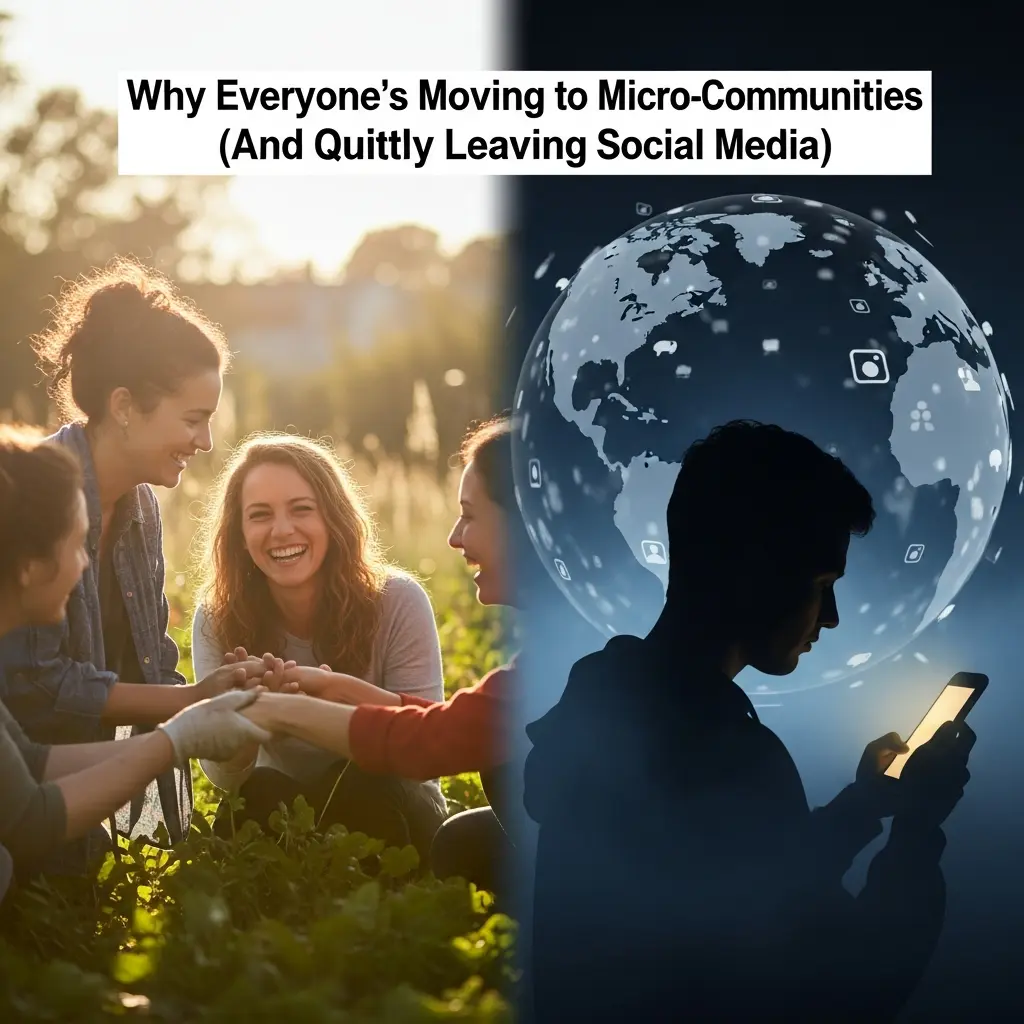
And that is exactly why people are quietly moving away – not entirely forsaking social media, but changing the way they use it.
They are relocating to smaller, more intimate places where things are real again.
The Issue With Big Social Media
It used to feel strong, to get to thousands of people.
Today it feels crowded.
Your feed is packed. Everybody is posting. Everyone is trying to get noticed. And much of it just mixes together.
You may produce something profound and it can be gone in minutes. Not because it sucks. But because there is too much stuff competing at the same time.
How many do you remember five minutes later?
That’s what the large platforms are like now.
Content isn’t the problem. Attention is.
And when attention is stretched thin, even good content struggles to make an impact.
This is when people began to understand that reach did not always equal connection.
Moving to smaller spaces
People aren’t attempting to reach everyone, they’re trying to reach the appropriate people.
They’re moving to smaller groups, secret communities, niche venues where the conversation is more organic.”
This isn’t the kind of environment where you try to impress strangers.
These are sites where people really care about what is being said.
And that slight distinction makes all the difference.
Power of Micro-Communities
In a tiny community you’re not simply another profile in the sea.
When you talk, people listen. They answer. You are the memory.
Conversations don’t feel forced or hurried. They feel… normal.
You’re not blogging for validation, you’re doing something.
And that’s something large platforms generally don’t offer right now.
From Communities to Followers
There’s an undercurrent change from “followers” to “belonging.”
Followers seem fantastic on paper.
But being in a community feels different.
It feels like it’s personal.
People don’t just respond to your content, they engage with it. They tell you what they think. They return.
And that produces something more stronger than just numbers, over time.
–Why Creators Are Moving
This shift is much more obvious for creators.
Posting on huge sites is a bit of a lottery. One post will reach thousands, the next hardly anyone.
It’s difficult trying to work out what works and doesn’t.
Smaller towns offer a sense of stability.
You are not algorithmic You are connection building
And really, that is far more satisfying.
The Trust Factor
Trust is a rare commodity on major platforms.
You’re never quite certain what is real and what is merely made for attention.
But in smaller environments, trust builds very naturally.
You see the same individuals again and over again. You begin to see things through their eyes.
And talks gradually become more honest.
It’s hard to build that type of trust in a congested setting.
–The Business Opportunity
“This is a big change from a business perspective.
A tiny engaged audience is often more useful than a huge silent crowd.
Because when people trust you they listen.
“They are much more likely to support what you do, whether that’s buying something, sharing your content, or simply staying in touch.”
It’s not about how many people you reach. It’s about how many people care.
Why the Big Platforms Are Losing Their Grip
Big platforms aren’t going away.
But the role is shifting.
They’ve become sites where individuals find stuff, not where they build profound connections.
It’s like walking down a crowded street, you see a lot but you don’t stop long.
And the real conversations are happening somewhere quieter.
- The Psychology of This Shift
At its foundation, this change is profoundly human.
People connect better in smaller groups.
It’s easier to talk, to listen, to share.
Large areas might be intimidating.
Smaller areas feel more intimate. 1. Acquainted.
This is why people gravitate to them without even thinking too much about it.
–The Role of Exclusiveness
There’s something interesting there, too, about locations that aren’t open to everyone.
If access is limited, it seems to be worth more.
People are more concerned They communicate more.
It makes you feel like you’re in on something, rather than just skimming through everything.
–Is social media dead?
Not exactly.
It’s just changing.
The loud, fast-moving version of social media still exists.
But a quieter version is rising alongside it – one that is more about connection than prominence.
- How to Cope with This Trend
This shift is important when you’re creating content or building anything online.
Don’t focus on numbers. Focus on people.
Make room for talks to occur. Listen at least as much as you talk.
Because connection is what makes people stick around, not just content.
- The Future of Online Connection
Now, the internet appears to have two sides.
One is quick, busy and loud.
The other is slower, more personal, more significant.
And more and more people are taking time on the other side.
- Last Thought
For years, going bigger was the name of the internet success game.
More fans. View more. Longer reach.
But now people are beginning to appreciate something else.
Straight up. Real relationships. A sensation of belongingness.
Because at the end of the day, people don’t only want to be noticed.
They want to feel as if they are important.